
News and Notes | The Anchor Run Blog
Posts Filtered by Month - June 2026 |
Show Recent Posts
June 28, 2026
Summer Staples Start
by Farmer Derek
Summer Staples Start
by Farmer Derek
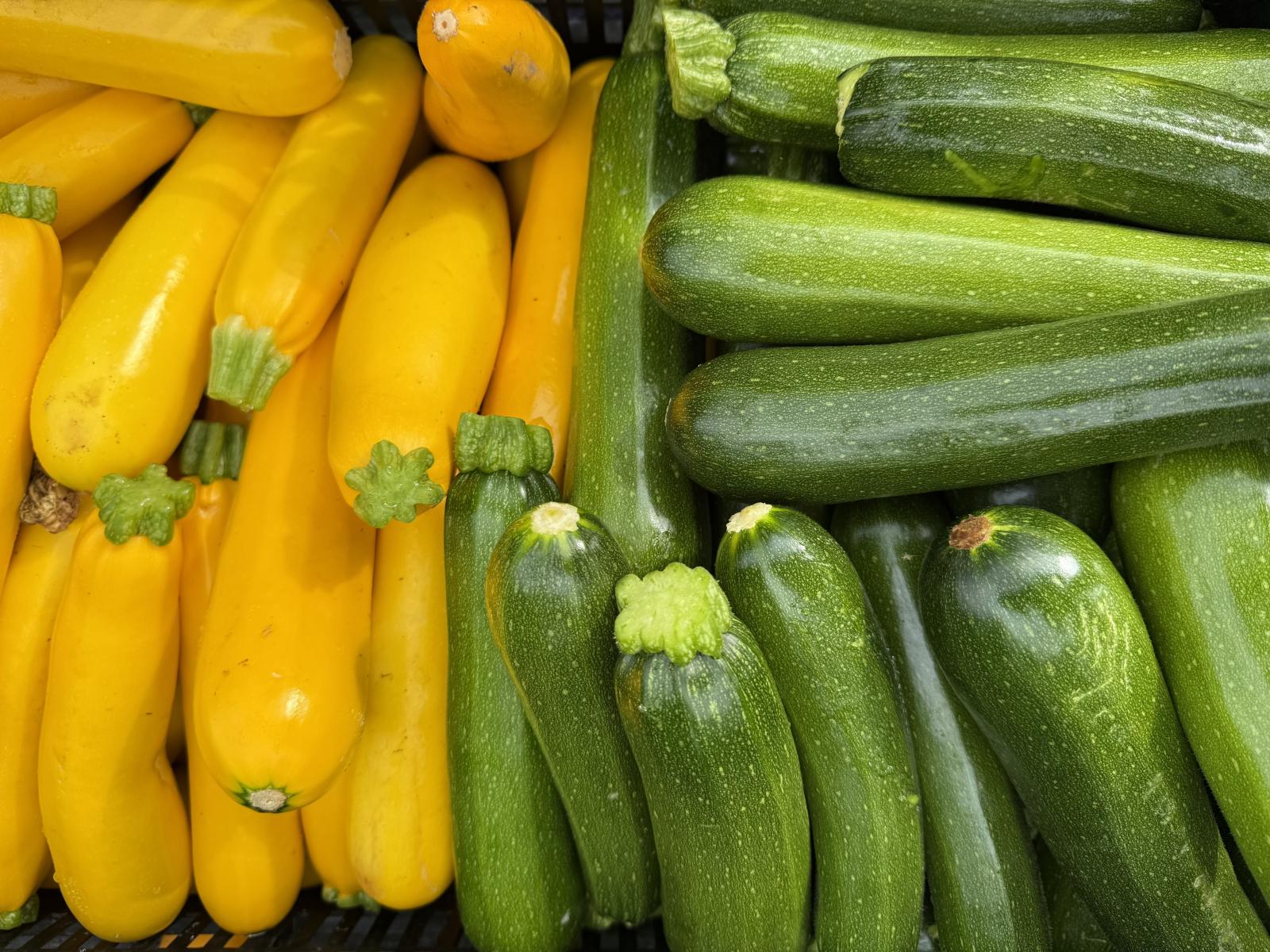
Somehow we're already firmly in peak zucchini season. Photo courtesy of Farmer Tara.
Harvest #8 (Week B) should include cabbage, cucumbers, zucchini, fennel, escarole, head lettuce, basil, kale, hakurei turnips, kohlrabi, scallions, garlic scapes, chard, and collards. Some items will be a choice.
U-pick should include green/string/snap beans, flowers, and labeled herbs like sage, garlic chives, oregano, catnip, cilantro, dill, lemon balm, mint, parsley, and bronze fennel (bring scissors).
FYI we do our best to predict the harvest but we don't always get it 100% right.
Regarding U-pick:
- Check the u-pick board in the hallway for u-pick crops and amounts before picking. Amounts listed are per share per week.
- Only crops listed on the board are available for u-pick.
- U-pick crops and weekly allotments can be harvested any day of the week, 8am–8pm, Monday through Sunday of your pick up week. So if you can’t do your u-pick on your scheduled pick up day, feel free to come back any other day that week.
- BYO scissors for herbs and flowers.- We provide half-pint, pint, and quart u-pick baskets for members to measure and harvest into. Please save these and reuse them as much as possible. If you have some that are still in good shape at the end of the season we'll gladly accept them back.

June 28, 2026
Calm Before The Heat
by Farmer Derek
Calm Before The Heat
by Farmer Derek
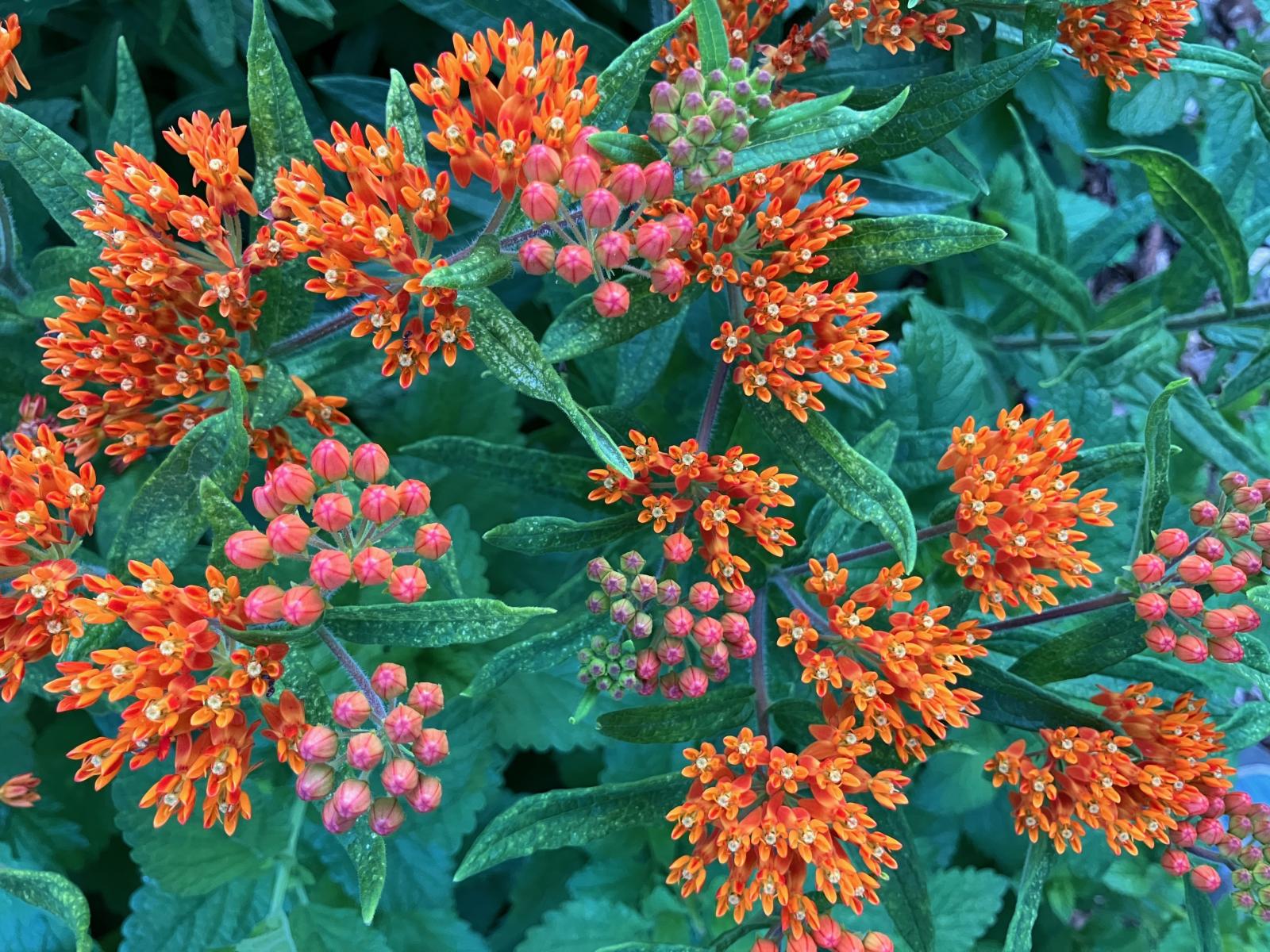
Who needs fireworks when there's butterfly weed and fireflies?
Our collective farm mettle will be tested later this week, with some of the hottest temperatures I've seen forecast. Hopefully by now we've acclimated somewhat to summer's heat and humidity, though it's actually been relatively cool and comfortable of late. We'll try our best to get the more physically demanding tasks finished in the mornings and save easier ones for the afternoon hours.
I do find it an interesting mind and body endurance experience and challenge when working in extreme conditions. Farming can be a great practical and constructive replacement for the gym and sauna after all. As long as common sense and awareness are present, it's good to be pushed once in a while. Maybe I'll change my tune on Thursday and Friday when it's over 100 degrees, not mid-60s like it is right now on this cool Monday morning.
Hanging over our heads this week is the arrival of 7,000 strawberry plants. Beds are ready for them but, depending on when they actually arrive and how the weather is, it's possible we won't be able to plant them until next week. Ideally we'll get them in this week and then it'll rain on them a time or two as the heat breaks this weekend. It's not the most physically demanding farm task, but over a mile of strawberry row feet is still a lot of planting, getting down and up, working those fingers and wrists to push roots into wet soil and squeeze it around them, making sure one of the farm's most beloved crops is successfully in the ground for a future harvest. Wish us luck.
June 28, 2026
Workshifts this Week (6/29/26)
by Farmer Derek
Workshifts this Week (6/29/26)
by Farmer Derek
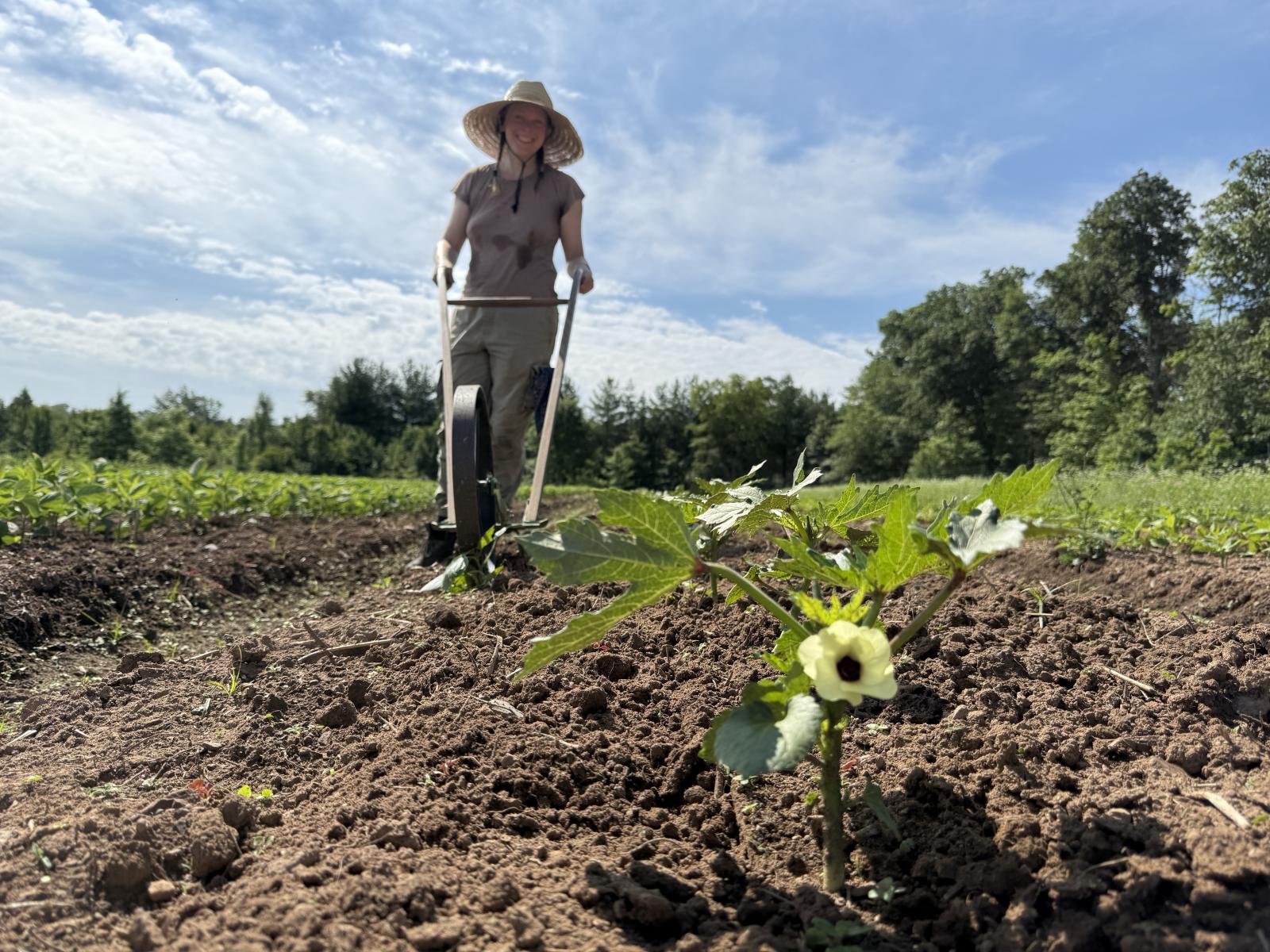
Farmer Lina cultivating okra. Photo courtesy of Farmer Tara.
This week's workshift schedule:
- Sunday 7/5 7-9am
Bring gloves, water, a hat, sturdy shoes, and a pad for kneeling (if necessary for you).
We meet under the large red maple at the end of the barn by the pick up room.
Please be there by the scheduled start time (it might be hard to find us in the fields otherwise).
June 28, 2026
Calling for Bags!
by Farmer Dana
Calling for Bags!
by Farmer Dana
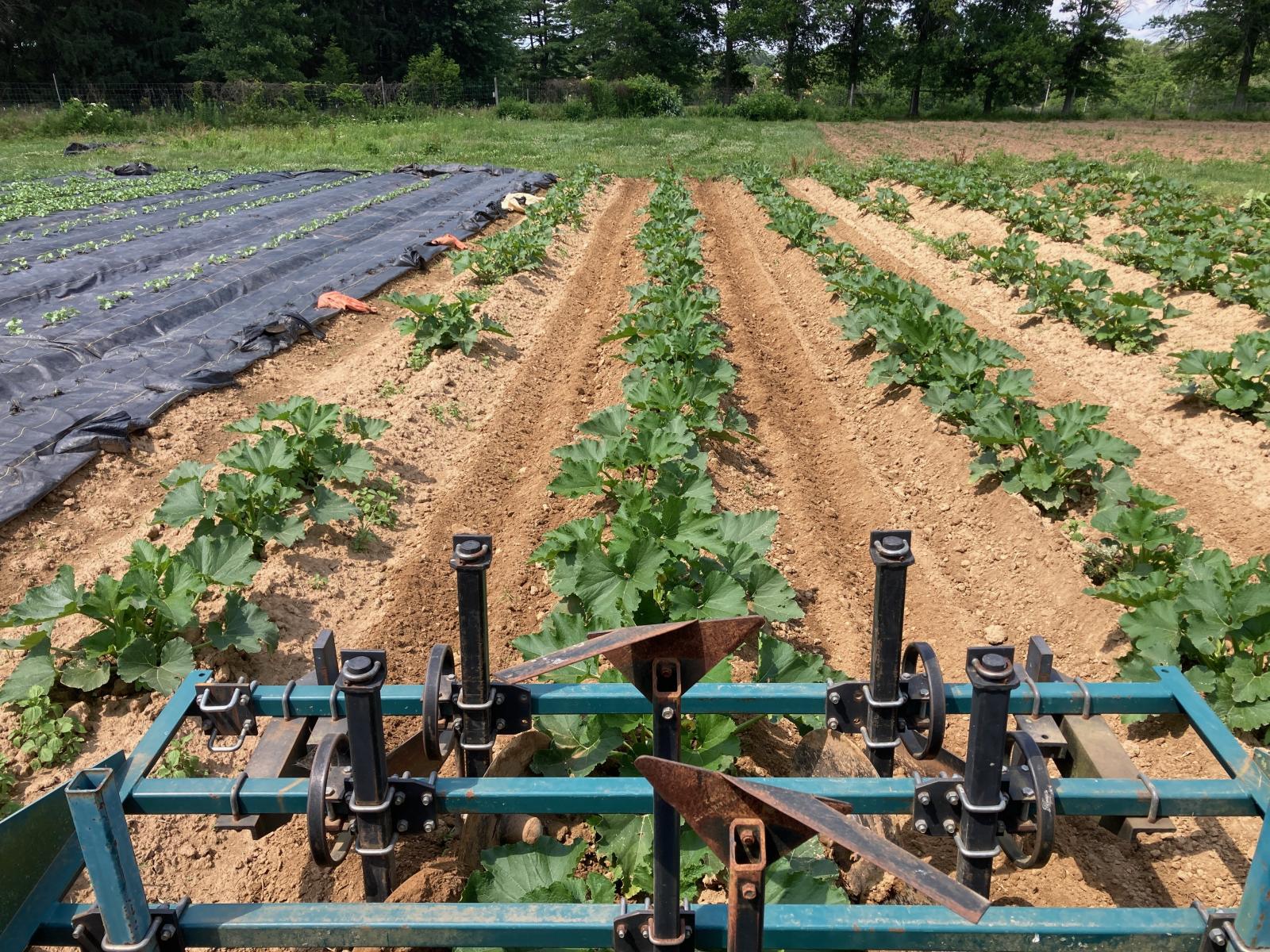
Hilling and cultivating winter squash and pumpkins one final time.
If anyone has grocery store bags saved up, please bring them to the farm. We can give them a second life in the Harvest Room with members who need them to collect shares. You can put them in the bins under the first harvest table immediately to your left as you walk in the Harvest Room.
June 28, 2026
Salads and Stir Fries
by Linda Dansbury
Salads and Stir Fries
by Linda Dansbury
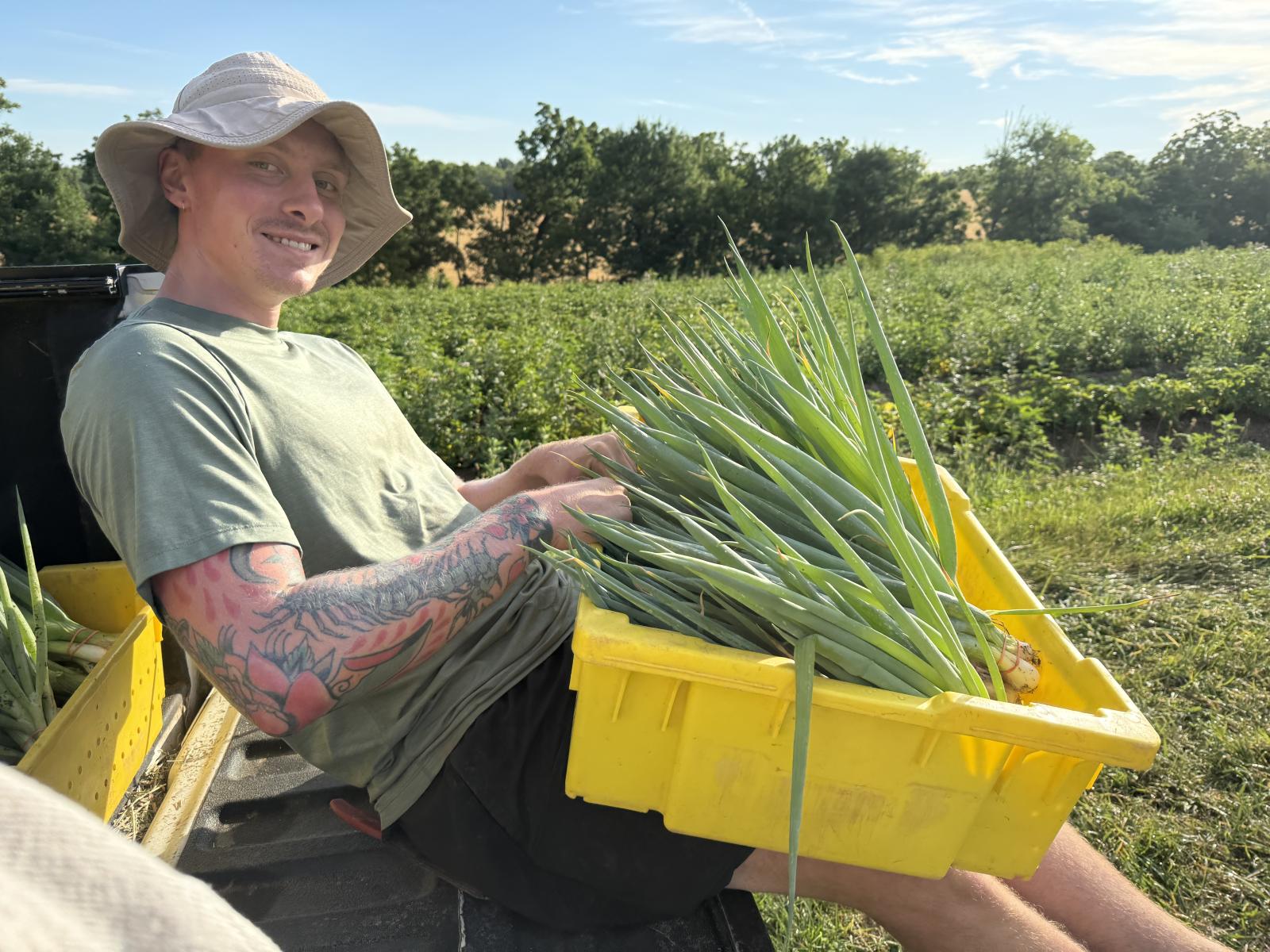
Morning truck ride back to the barn after harvesting scallions with Farmer Connor . Photo courtesy of Farmer Tara.
The temps are supposed to go way up this week, so we don't want to warm our kitchens with hot ovens. Keep your slow cooker in mind - you can cook most meats in it without heating up the house. Stir fries and salads are great ways to enjoy the harvests without heating up the house too much. Here are a few things we enjoyed this past, cooler week.
Snap peas, garlic scapes, scallions, kohlrabi - made a delicious stir fry with shrimp as our protein. Stir fried the shrimp in neutral oil for about 2 min. Removed from wok and added garlic and kohlrabi. When cooked until crisp tender, added the peas and garlic scapes and let it go for about 2 min. Added shrimp back in and a stir fry sauce. Turned heat off and sprinkled with fresh herbs.
Cucumbers, scallions, cilantro - one of our favorite summertime snacks are Spiced Cucumber Sticks - when you first look at the recipe it might seem a bit cumbersome but I typically do not peel the cucumbers, nor do I remove the seeds because there often are not many to remove. After that, it comes together very quickly. Fun and delicious!
Peas, garlic scapes, scallions, herbs - made another dinner with peas and this time sauteed everything up, cooked some pasta and added pasta to the large saute pan and mixed well. We had cooked some sweet Italian sausage in the saute pan first as our protein.
Zucchini, garlic scapes, scallions, herbs - made the Savory Zucchini Muffins from this site. They take a little while to put together so I normally double the recipe. They freeze well, so you will have many muffins for easy and satisfying breakfasts. We often have guests stay over with us, and these are always a big hit. I make them ahead, warm them up and serve with whatever seasonal fruit is available.
Zucchini, herbs - I have said that my favorite way to enjoy zucchini is to grill it. This recipe takes a bit of planning ahead, but is worth it - Zucchini Salad with Shaved Parmesan Cheese - we were planning to grill anyway, so it made for a really nice side dish/salad.
Enjoy the harvest! Stay safe through the coming week's heat. I am taking off next week but looking forward to sharing harvest ideas for the rest of the summer!
June 28, 2026
More Newbies
by Linda Dansbury
More Newbies
by Linda Dansbury
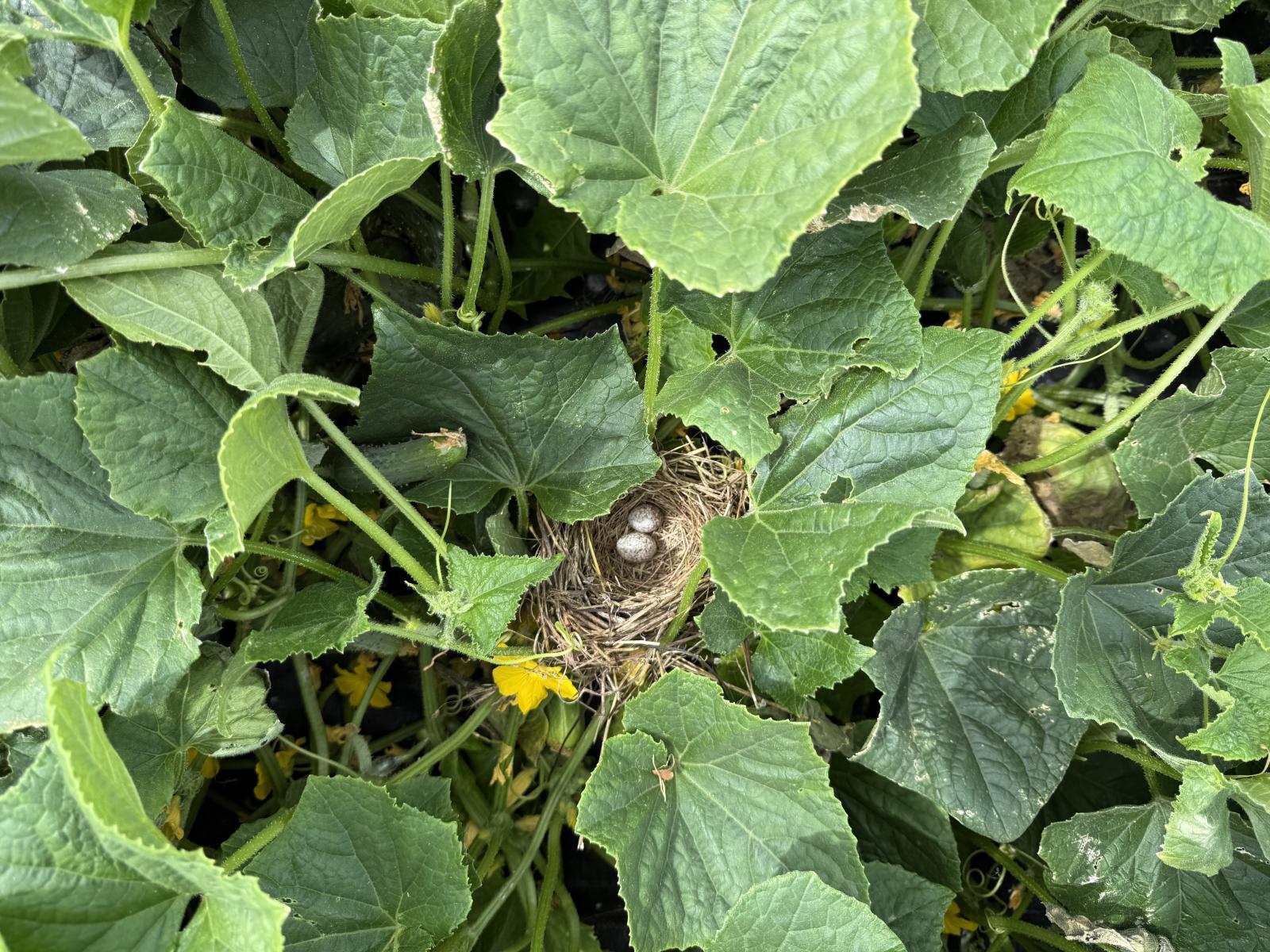
Bird nest amongst the cucumbers. Photo courtesy of Farmer Tara.
The new veggies keep coming! This week, cabbage, fennel, green/string/snap beans, basil, and chard are new!
Swiss chard - this is the one cooking green I welcome all year long. For this time of year, it saute's and stir fries up really well and quickly. Slice the stems and saute them with other veggies that take a few minutes such as kohlrabi, turnips, onions, etc. Add the chopped leaves near the end and just wilt for a couple minutes - add whatever seasonings you want - now that basil is available, add that when you turn the heat off. Yum!
Fennel - I think it is such a treat. It stores well in a plastic bag in the fridge. It can be eaten raw like celery and has a licorice/anise flavor. Cooking it tones down the flavor. It cooks up wonderfully in lentils (one of my favorites). Fennel is great matched with Salmon - Salmon and Fennel with Roasted Lemon Vinaigrette. It contributes beautiful flavor to Roasted Fennel and White Bean Dip, and one of my favorite summer salads is Shaved Fennel Salad with Parmesan Cheese - so simple and delicious!
Cabbage - stores very well in plastic - as with other things, make sure it is dry before you place in the bag, or wrap in a paper towel. Everyone has their favorite cole slaw recipe, but have you tried roasting or sauteing? Both bring out an almost sweet, nutty flavor when you allow the edges to brown. Preheat the oven to 400. Put down parchment paper and place slices of cabbage on top. Drizzle, or brush on a bit of olive oil or melted butter. Sprinkle with a little salt and pepper - add additional flavorings if desired - paprika, tumeric, cumin, onion and/or garlic powder, red pepper flakes, etc.,. Bake until desired tenderness, about 30 minutes.
Green/snap/string beans - part of U-Pick crops - make sure you get your share! Again, everyone has their favorites ways to enjoy beans. Since they are so fresh, they cook up pretty fast - check them starting at 5 min and drain as soon as they are crisp tender. As you will see throughout the summer, I make our veggies into salads A LOT! I like this approach because salads with veggies often can be made ahead of time - beans are the perfect example and salads made with them taste better when they sit awhile. Try the Green Bean Salad with Basil Vinaigrette.
Basil - love this summertime herb! Basil does not like to be refrigerated - keep it in a jar on the counter. I keep several herbs in a jar in my kitchen - sprigs of thyme, mint, parsley, cilantro and basil. Allows for easy access when preparing dishes.
Edible Flowers - nasturtiums and calendula are delicious and pretty and can be found in the herb garden. Snip the flowers and place in water as soon as you can. The nasturtiums provide a peppery taste and the leaves are delicious in salads as well - but don't cut many leaves - we want the flowers to be around for the summer. Calendula flowers are a bit tangy and peppery. Enjoy this fun part of the harvest!
June 21, 2026
Overlapping Seasons
by Farmer Derek
Overlapping Seasons
by Farmer Derek
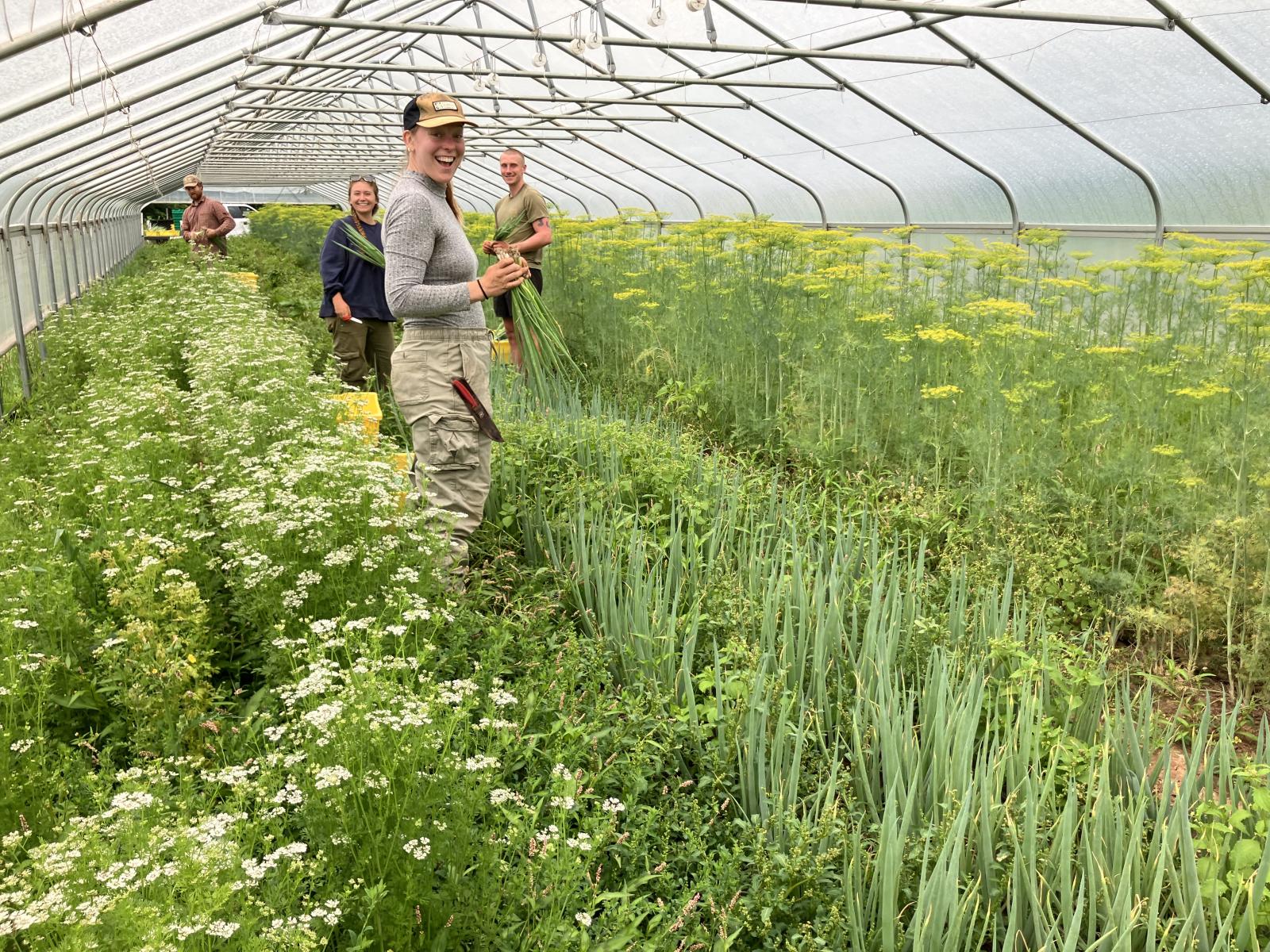
Farm crew harvesting scallions amongst flowering cilantro and dill in the hoop tunnel.
Harvest #7 (Week A) should include cabbage, cucumbers, zucchini, fennel, escarole, romaine, head lettuce, radicchio, lettuce mix, kale, salad radishes, hakurei turnips, kohlrabi, scallions, garlic scapes, and collards. Some items will be a choice.
U-pick should include snow peas, snap peas, flowers, and labeled herbs like sage, garlic chives, oregano, catnip, cilantro, dill, lemon balm, mint, parsley, and bronze fennel (bring scissors).
FYI we do our best to predict the harvest but we don't always get it 100% right.
Regarding U-pick:
- Check the u-pick board in the hallway for u-pick crops and amounts before picking. Amounts listed are per share per week.
- Only crops listed on the board are available for u-pick.
- U-pick crops and weekly allotments can be harvested any day of the week, 8am–8pm, Monday through Sunday of your pick up week. So if you can’t do your u-pick on your scheduled pick up day, feel free to come back any other day that week.
- BYO scissors for herbs and flowers.- We provide half-pint, pint, and quart u-pick baskets for members to measure and harvest into. Please save these and reuse them as much as possible. If you have some that are still in good shape at the end of the season we'll gladly accept them back.
June 21, 2026
With Summer, Rain?
by Farmer Derek
With Summer, Rain?
by Farmer Derek
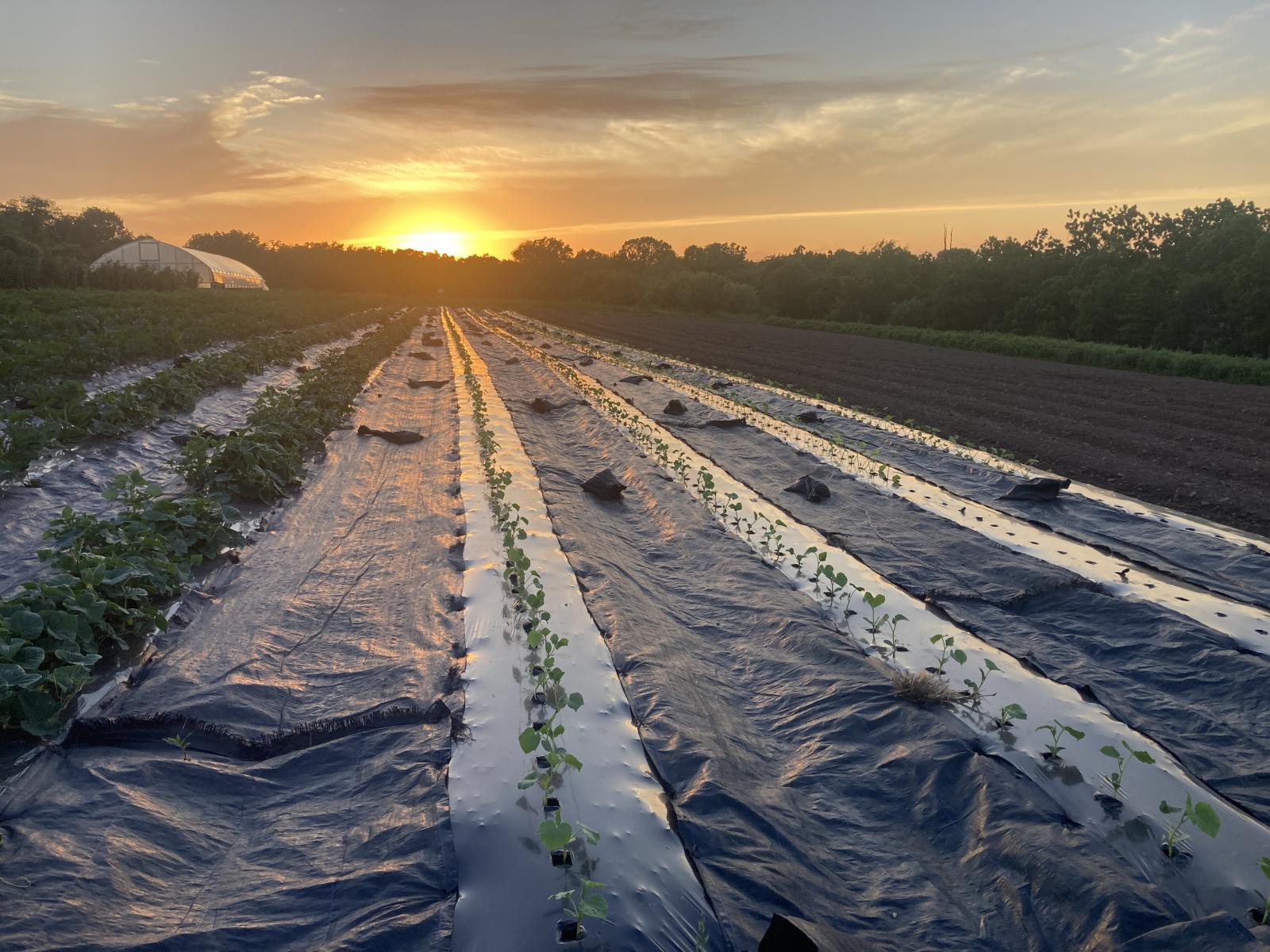
Our Sun sets behind three plantings of zucchini and cucumbers.
Could it be that we receive some satisfying rain two weeks in a row? We'll find out later today and tonight, though hopefully it won't be torrential and damaging. Anticipating a couple of rain events this week, we transplanted some crops ahead of schedule last week and on Saturday I finalized 3,500' of beds for 7,000 strawberry plants that are due to arrive next week. We treat strawberries as an annual crop, planting a new patch in a new location each year. This helps thwart pest and disease pressure while hopefully maintaining proper soil health through rotation. These bare root 'tips' are still actually dormant, having been kept in cold storage at a farm in Massachusetts. Once planted and exposed to the heat of summer, they wake up almost instantly, turn green as they photosynthesize, and try to flower and produce fruit. So they don't unnecessarily waste energy on small fruit this summer, we systematically cut off each flower blossom/cluster. That way they can spend more time developing their roots systems and canopy for a harvest next season. Planting 7,000 tips is a big task and we look forward to its completion.
June 21, 2026
Workshifts this Week (6/22/26)
by Farmer Derek
Workshifts this Week (6/22/26)
by Farmer Derek
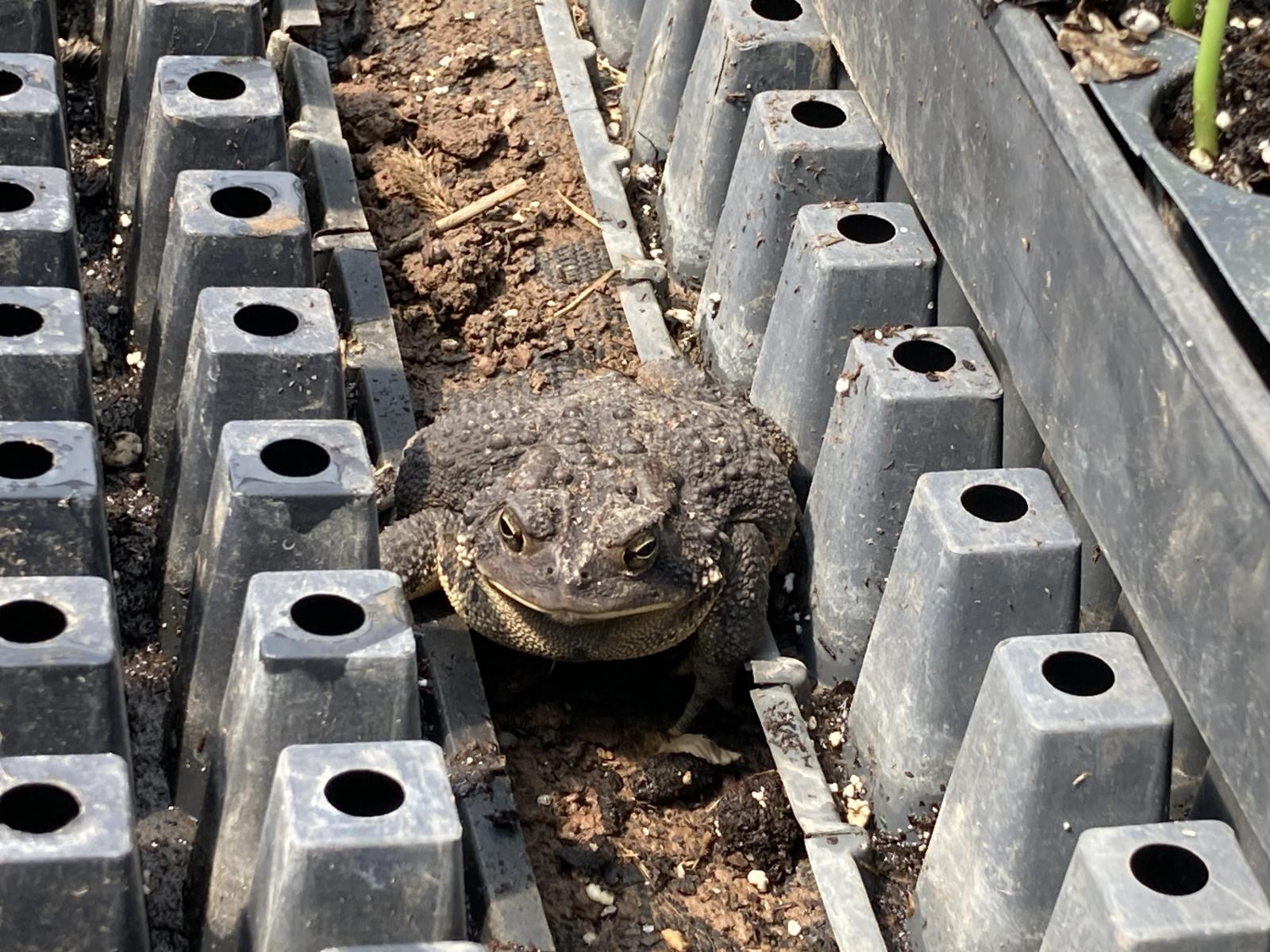
Mister or missus toad on patrol in the hoop house.
This week's workshift schedule:
- Wednesday 6/24 9-11am
- Wednesday 6/24 6-8pm
- Friday 6/26 9-11am
- Sunday 6/28 8-10am
Bring gloves, water, a hat, sturdy shoes, and a pad for kneeling (if necessary for you).
We meet under the large red maple at the end of the barn by the pick up room.
Please be there by the scheduled start time (it might be hard to find us in the fields otherwise).
June 21, 2026
Calling for Bags!
by Farmer Dana
Calling for Bags!
by Farmer Dana
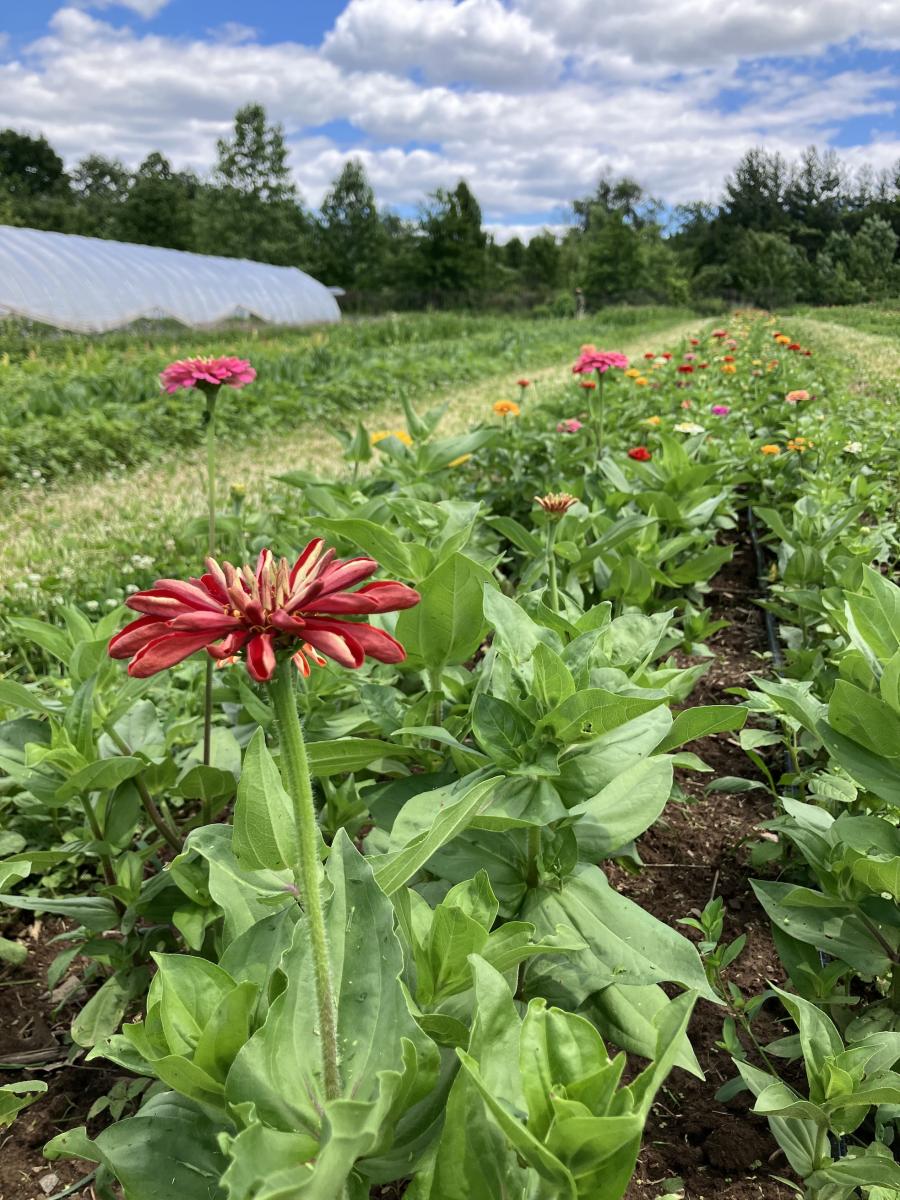
The main u-pick flower patch is in the same field as the strawberries (Field 1), but go left once through the gate. Summer u-pick staples like cherry tomatoes, beans, edamame, and tomatillos will also be in this field. Once peas are wrapped up, the only other u-pick crops located in that field are blackberries and hopefully raspberries, ripening later this season.
If anyone has grocery store bags saved up, please bring them to the farm. We can give them a second life in the Harvest Room with members who need them to collect shares. You can put them in the bins under the first harvest table immediately to your left as you walk in the Harvest Room.
June 21, 2026
2026 Now What?! Workshops Recap
by Gia Yaccarino
2026 Now What?! Workshops Recap
by Gia Yaccarino
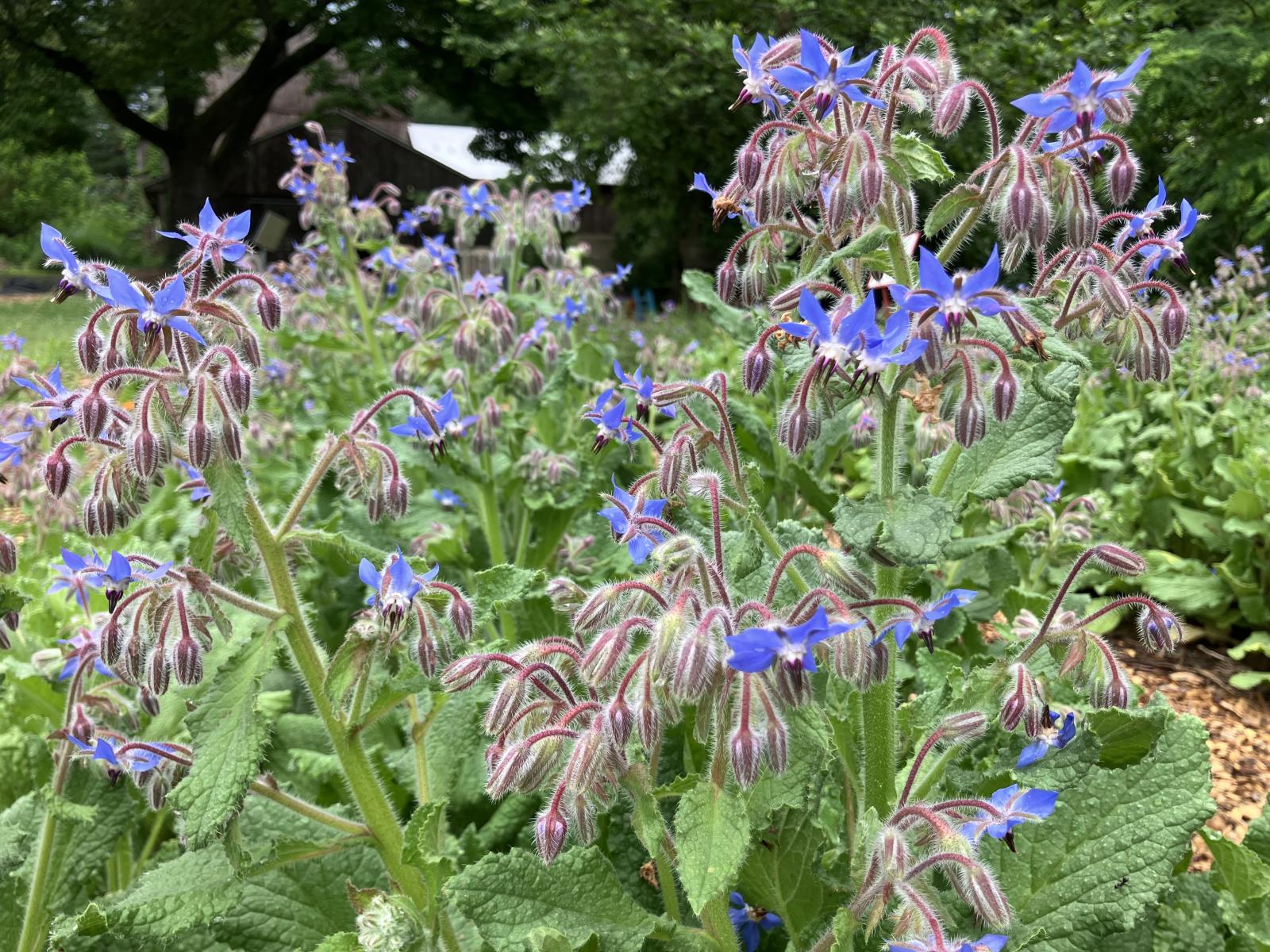
Borage, an edible flower and herb. Flowers and leaves are edible, tasting somewhat like cucumber.
Now What!? Workshops 2026
I say it every year because it’s true – I love hosting the Now What!? workshops! I meet so many wonderful people, I get to talk about the farm with them, and I LOVE to talk about the farm!
The farm has been my “happy place” for over 2 decades! I didn’t see it coming and I was not looking for it, but it just happened!
Maybe it is the 10 MPH speed limit when you enter the farm driveway – I am usually in a rush from one thing to another and then I enter the farm driveway and it’s a reminder to slow down. Even my thoughts stop racing. Whether I am picking up my share in the barn or going to the fields to do the U-Pick for the week, a true sense of calm washes over me.
Speaking of the speed limit on the farm – I understand that you are so excited to get your share and do your u-pick and then get home and start cooking up the bounty – but PLEASE PLEASE PLEASE – slow down on the farm – the maximum speed is 10 MPH.
Anyway – I love the farm and I love to share it with others and help make their CSA experience a success!
I want to challenge all the members this year to make a new farm friend – whether it’s picking up your share or doing your u-pick or during a work shift. Talk to each other! I have gotten great ideas talking to other members!
This year, all of the workshops were a much more personal experience – I was able to interact one on one!
There were a few common themes at the workshops – among them how to store the produce and what to do with all the greens!
What to do with all the greens?
In my household, the more delicate greens (like the lettuce mix) are consumed first. The kale, radish and turnip greens are blanched and then squeezed into a little ball and stored in a Ziploc bag in the freezer to be used during the non-growing season for soups or to stir in pasta.
Before I blanch the kale, I take it off the center rib and while it is compostable – I have a better use for it! Kale Stem Pesto (but without any nuts or olive oil!) – I combine kale stems, garlic and parmesan cheese in either liquid from a jar of Kalamata olives or tomato water. I had both types of Kale Stem Pesto to be tried at the workshops.
What’s tomato water? Just what it sounds like – the liquid that ends up all over the counter when you are slicing tomatoes! I slice the tomatoes in a container so I can use the liquid later.
Have fun substituting one green for another in recipes – if a recipe calls for spinach and you don’t have spinach, but you have bok choy – use the bok choy! You will have more success swapping in a green with a similar bitterness profile.
One member this year admitted – “I get bok choy – I think stir-fry. I get romaine - I think Caesar Salad.” I had that same mindset for a long time! Once you free yourself of that mindset – the possibilities are endless!
And how about those lovely large romaine leaves? How about using those for a sandwich wrap!?
The romaine and escarole are great grilled. I cut the heads in half and rinse, then place in a large cast iron skillet with some olive oil cut side down first and cook for a few minutes. I flip it over and cook for another few minutes. Once it is done cooking, I turn off the heat, spray with olive oil, balsamic vinegar and sprinkle with parmesan cheese and cover so the cheese gets all melty. Yum! This was another treat that participants got to try!
Storage
I use specific containers by Rubbermaid which have a tray on the bottom to keep the vegetables away from any condensation. You can accomplish the same end effect by placing a paper towel in the bottom of the container or in the plastic bag.
Last year, a member said that she has had great success with using empty cereal bags to store the greens. I can confirm that cereal bags are terrific for this!
Herbs
During the 2022 Growing Season starting with week 8, I wrote a weekly article for the newsletter about the different herbs available at Anchor Run CSA. Please check it out!
My Favorite Cookbook
Of all of the cookbooks I own, my very, very favorite is From Asparagus to Zucchini. It includes storage tips, cooking tips and a bunch of recipes, arranged alphabetically by vegetable. It has been indispensable! It is available on Amazon. It is also available as Fair Share CSA Coalition’s website but you have to pay for shipping!
Kohlrabi and Root Vegetables
I start by cooking sliced radishes, turnips and kohlrabi in 1 cup of better than bouillon.
I then add Bok choy and Komatsuna stems (chopped) with the radishes and turnips. Once they were done, I turned off the heat and mixed in the thinly sliced Bok choy and Komatsuna leaves.
I create a sauce from teriyaki sauce, Bragg’s Ammino Acids (or soy sauce) and peanut butter. I then added the cooked veggies to the sauce and stirred them to coat them. When we get a lot of parsley – pureeing the parsley into the sauce is a great addition!
Tasting this recipe was a great way to answer the second most common question – what to do with Kohlrabi and all the root vegetables!
The hakurei turnips are also great with hummus!
Dehydrated Yummies!
I also shared some of my dehydrated treats – cucumbers, zucchini, beets, carrot, radish, tomatoes, cantaloupe! These seemed to be the favorite of all the treats I brought!
Random Topics
The warm food I shared, I kept warm in my solar oven!
One of the workshop days, we spoke about composting. There is a space in the farm parking lot to drop off your compost if you don’t have a compost pile at home. Things to avoid in a compost pile include dairy products, bones and plastic bags. And did you know – the produce stickers from the grocery store - those are non-compostable!
Painter’s tape is great for labeling (except on silicon) and does not leave a residue and it stays on in the freezer.
I guarantee that once you feel you know what to do which 1 vegetable that has challenged you, that one will be done for the season and a new vegetable will challenge you! Have fun with it!
Closing Thoughts
I hope everyone who attended the workshops gained a little bit of knowledge to help make your CSA experience a success. It was my pleasure to get to meet you all and hopefully I will see you at a potluck!
Thanks!
Gia
June 14, 2026
Solstice Snacks
by Farmer Derek
Solstice Snacks
by Farmer Derek
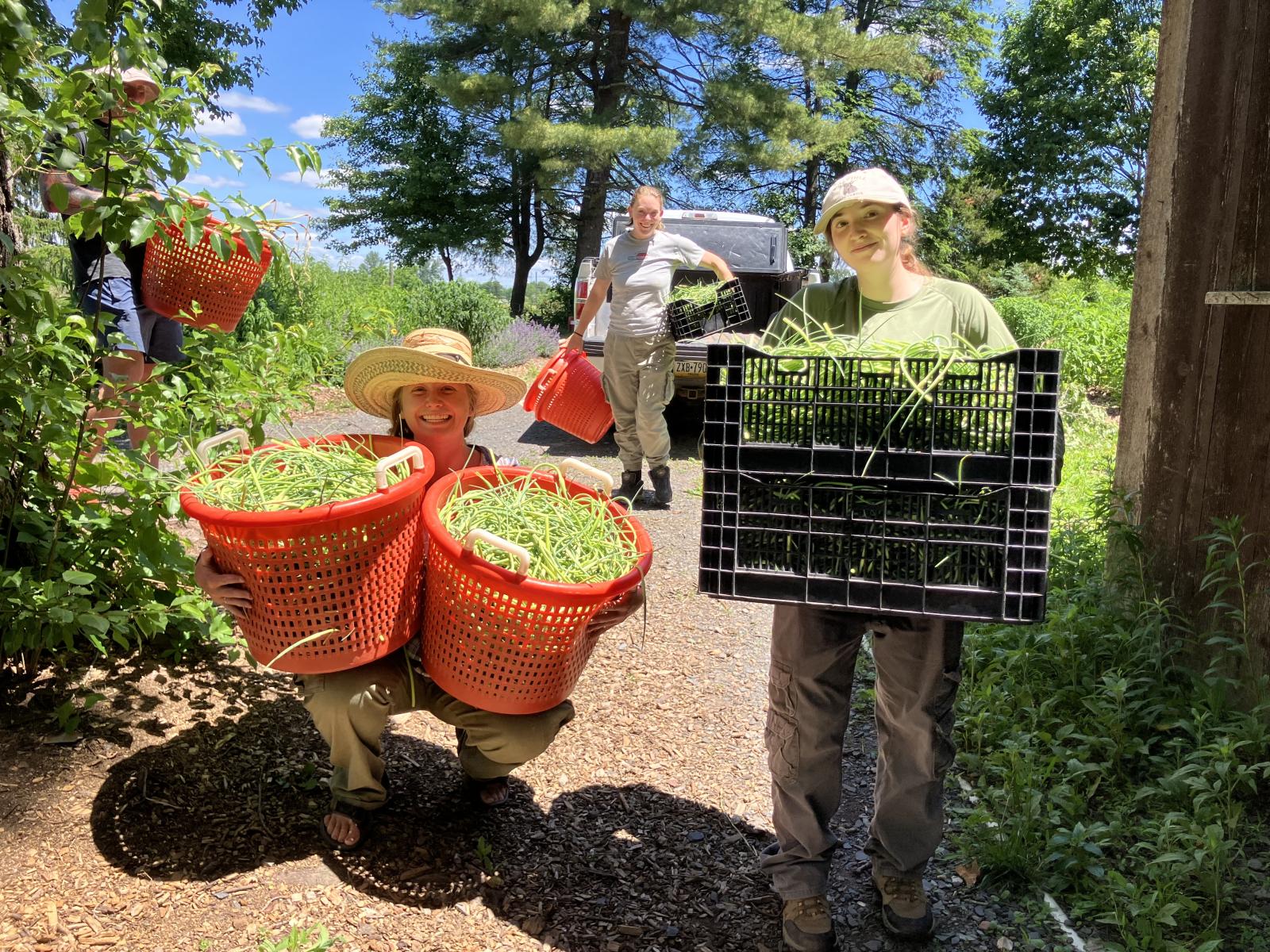
Farmers Connor, Tara, Lina, and Kate bringing in the first round of garlic scapes (5,000 down, maybe 15,000 more to go?).
Harvest #6 (Week B) should include escarole, romaine, head lettuce, radicchio, lettuce mix, kale, salad radishes, hakurei turnips, kohlrabi, dill, cilantro, scallions, garlic scapes, and collards. Some items will be a choice.
U-pick should include strawberries, snow peas, snap peas, and labeled herbs like sage, garlic chives, oregano, catnip, lemon balm, mint, parsley, and bronze fennel (bring scissors).
FYI we do our best to predict the harvest but we don't always get it 100% right.
Regarding U-pick:
- Check the u-pick board in the hallway for u-pick crops and amounts before picking. Amounts listed are per share per week.
- Only crops listed on the board are available for u-pick.
- U-pick crops and weekly allotments can be harvested any day of the week, 8am–8pm, Monday through Sunday of your pick up week. So if you can’t do your u-pick on your scheduled pick up day, feel free to come back any other day that week.
- BYO scissors for herbs and flowers.- We provide half-pint, pint, and quart u-pick baskets for members to measure and harvest into. Please save these and reuse them as much as possible. If you have some that are still in good shape at the end of the season we'll gladly accept them back.
June 14, 2026
Spring Sets
by Farmer Derek
Spring Sets
by Farmer Derek
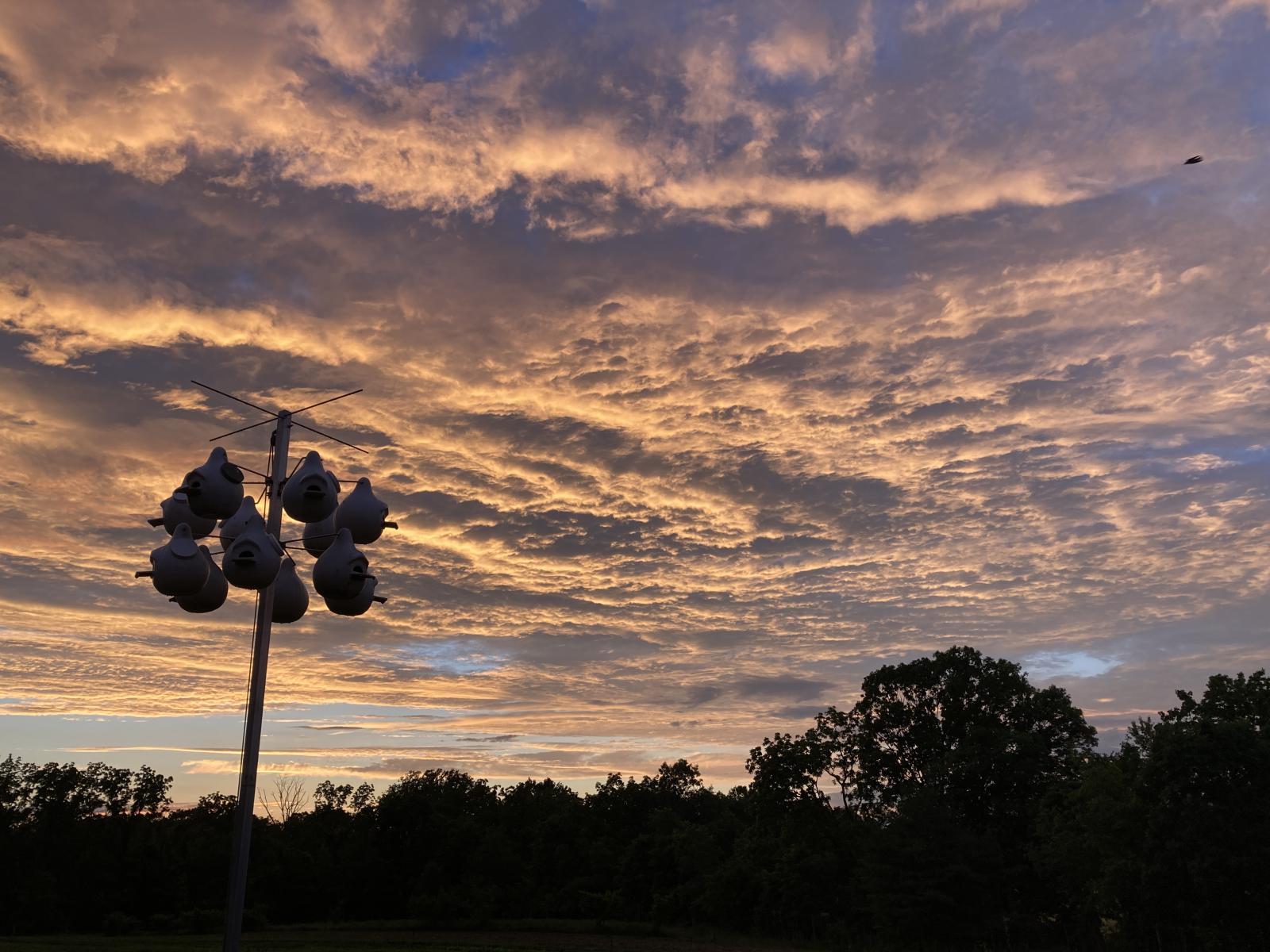
Goodnight tree swallows occupying the purple martin motel.
I continue to mistakenly assume we're about to turn a corner and the pace of planting crops will slow down some. It hasn't happened yet but perhaps after this coming week there'll be a slight drop after we transplant the 2nd round of cantaloupe, 2nd tunnel tomato, 8th bean, 6th edamame, 8th chard and dandelion, 10th lettuce and herb, as well as 3rd zucchini and basil. Last week we planted a lot of those same crops as well as 3,000 sweet potato 'slips'.
Purely based on the lessening amount of tractor work I'm doing each week to get space ready for future plantings I do know that a brief lull is on the horizon. But very brief it is because at the end of this month we'll plant 7,000 dormant strawberry plants for next year's harvest and following closely behind will be early-fall-harvested crops like broccoli, cabbage, kale, and beets. Incredibly, even though we're just over a third of the way into the growing season, 100% of our fields have now been worked one way or another preparing for crops. Now if only it would rain...
(Written before Sunday night's rain even - .75 inches!)
June 14, 2026
Workshifts this Week (6/15/26)
by Farmer Derek
Workshifts this Week (6/15/26)
by Farmer Derek
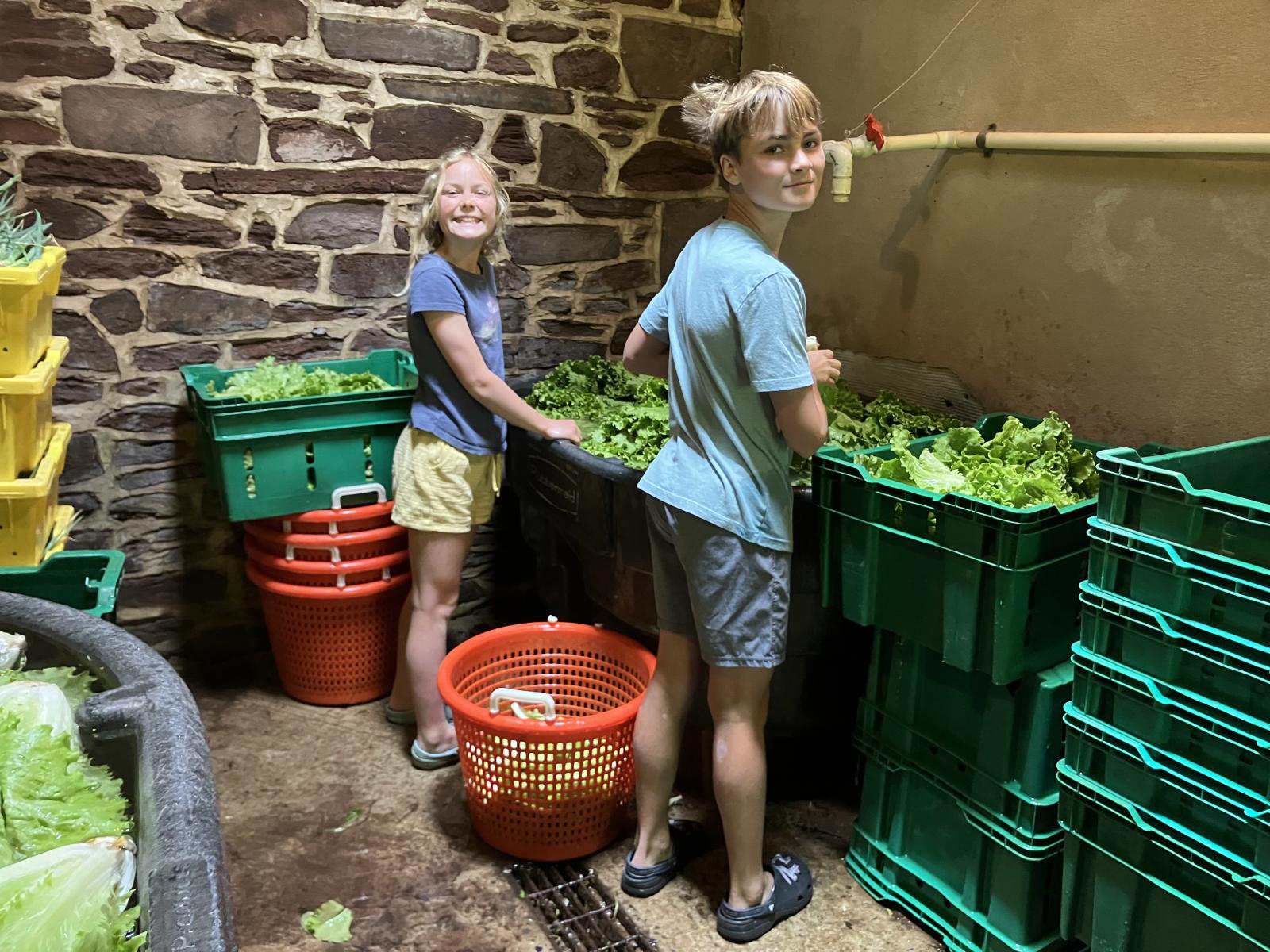
Farm interns learning how to properly wash a head of lettuce.
This week's workshift schedule:
- Wednesday 6/17 9-11am
- Wednesday 6/17 6-8pm
- Friday 6/19 9-11am
- Sunday 6/21 8-10am
Bring gloves, water, a hat, sturdy shoes, and a pad for kneeling (if necessary for you).
We meet under the large red maple at the end of the barn by the pick up room.
Please be there by the scheduled start time (it might be hard to find us in the fields otherwise).
June 14, 2026
Beginning of Summer Crops
by Linda Dansbury
Beginning of Summer Crops
by Linda Dansbury
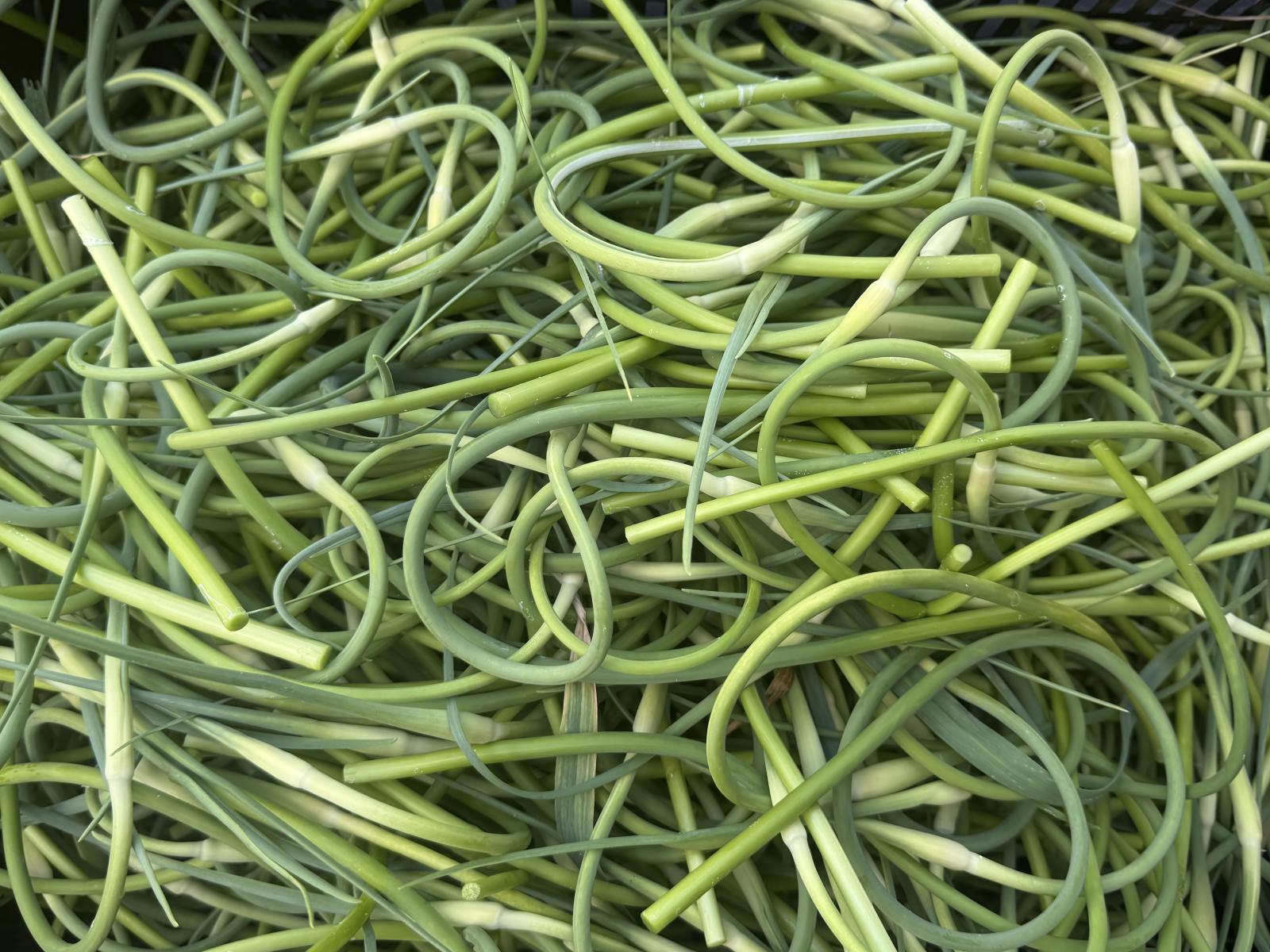
Garlic scape tangle. Photo courtesy of Farmer Tara.
This is the week right before the summer solstice, so it is appropriate to find the first of the zucchini arriving. This time of year, we have an overlap of Spring crops with the first of the Summer crops. Yay for us members to have such diversity in our shares. Here is a bit of info on the new veggies:
Zucchini - the farm grows different varieties, so you will see both green and yellow zucchini - try both. On a serving platter, the combo of the colors is beautiful. Zucchini store fairly well in the fridge and there is an almost infinite number of ways to enjoy them. One of my favorites is grilling - depending on size, cut them in half or quarters lengthwise, brush with a bit of olive oil and grill until they are cooked to your liking. Some people like them caramelized and very soft, others prefer them to have more texture. Either way is great. When off the grill drizzle with a bit more oil if desired, fresh chopped herbs, salt and pepper and even some grated parm or pecorino cheese or crumbled feta. Throw some scallions on the grill too for a delicious combo. The leftovers are great in frittatas, or in pasta/grain salads. This site has several recipes for zucchini breads and muffins, a fun easy salad called Zucchini Salad with Shaved Parmesan Cheese, and more - check out the site.
June 14, 2026
Calling for Bags!
by Farmer Dana
Calling for Bags!
by Farmer Dana
If anyone has grocery store bags saved up, please bring them to the farm. We can give them a second life in the Harvest Room with members who need them to collect their shares. You can put them in the bins under the first harvest table immediately to your left as you walk in the Harvest Room.
June 14, 2026
Stir Fry Heaven
by Linda Dansbury
Stir Fry Heaven
by Linda Dansbury
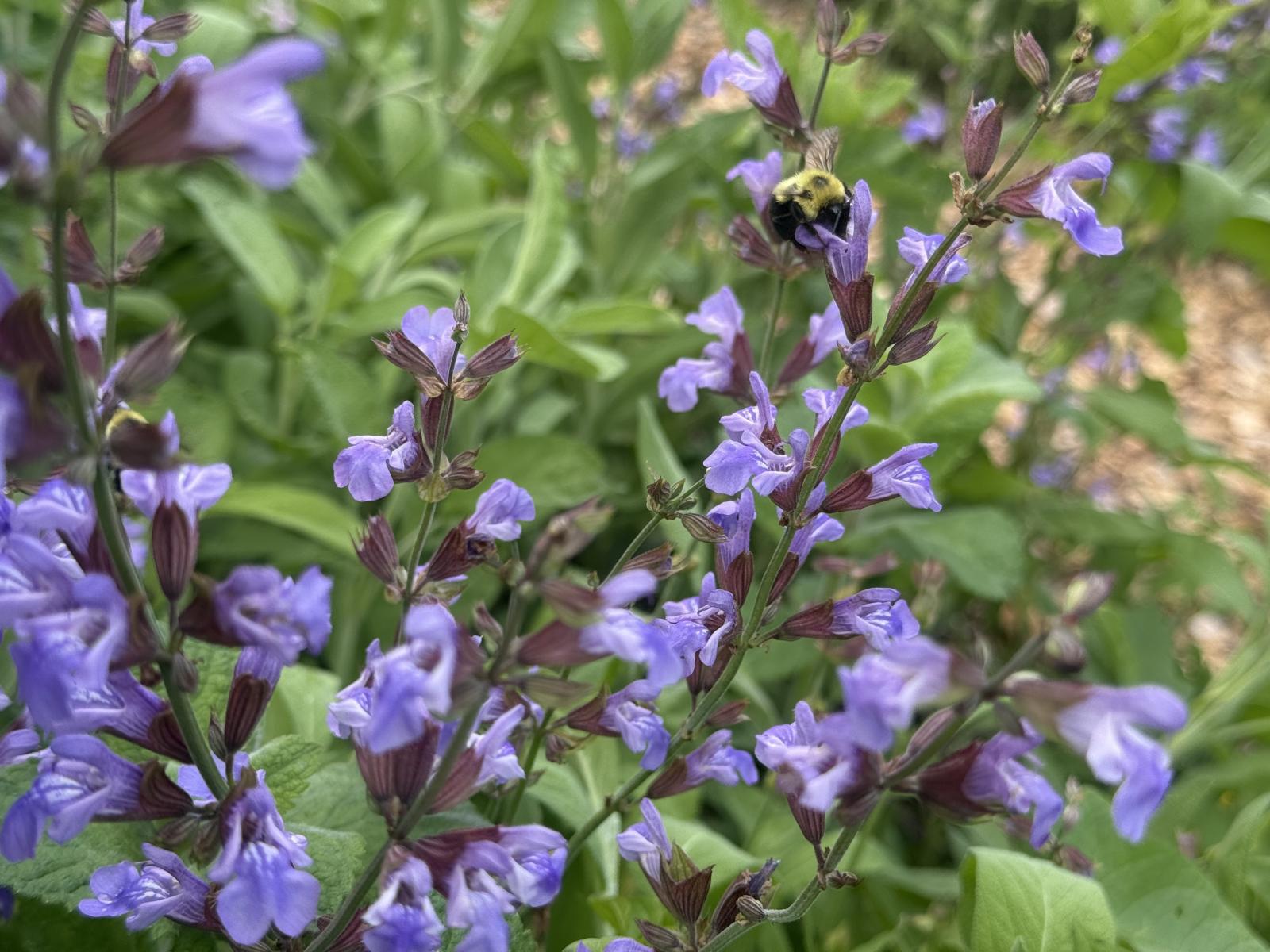
Sage blossoms and bumble bee. Photo courtesy of Farmer Tara.
Stir fries are one of my family's go-to meals. Cook up a pot of rice, fast cook a lot of veggies with a bit of protein of your choice, add a stir fry sauce that only takes a few minutes to put together, and you have your dinner. And without many dishes to clean up. This time of year it's especially fun because there are so many delicious veggies and herbs to choose from. Here are a couple meals we enjoyed the last week.
Snow peas, turnips, scallions, garlic scapes, cilantro, escarole/kale - for the stir fry protein, one night we used shrimp and in that one we added escarole at the very end as our green. For the other night, we used pork sliced thin, and we used kale as our green. I have added a recipe for Stir Fry Sauce to use as a guide. Typically, you cook the protein first until not quite fully cooked, and remove from pan or wok. Then add the onion/garlic component(s) and stir fry for a minute. Start adding veggies, starting with the ones that take the longest to cook. Finish with the greens, add the protein back in along with the sauce. Cook until the sauce is thickened, turn off the heat and finish with herbs. Enjoy!
Snow peas, kohlrabi, radishes - sometimes for lunch I just enjoy a bunch of raw veggies. To provide some protein, I change it up by having some cheese or tinned fish, and maybe a piece of nice bread or crackers. It's that simple and with veggies so fresh, it tastes great.
Romaine, radishes, peas, scallions, herbs - I made lettuce wraps, using romaine as the lettuce. You can keep these vegetarian or add a protein. We have 2 recipes on this site: Lettuce Wraps with Simple Dipping Sauce and Asian Lettuce Wraps. Both are really good.
Enjoy the harvest!
June 7, 2026
Love the Peas and Strawberries!
by Linda Dansbury
Love the Peas and Strawberries!
by Linda Dansbury
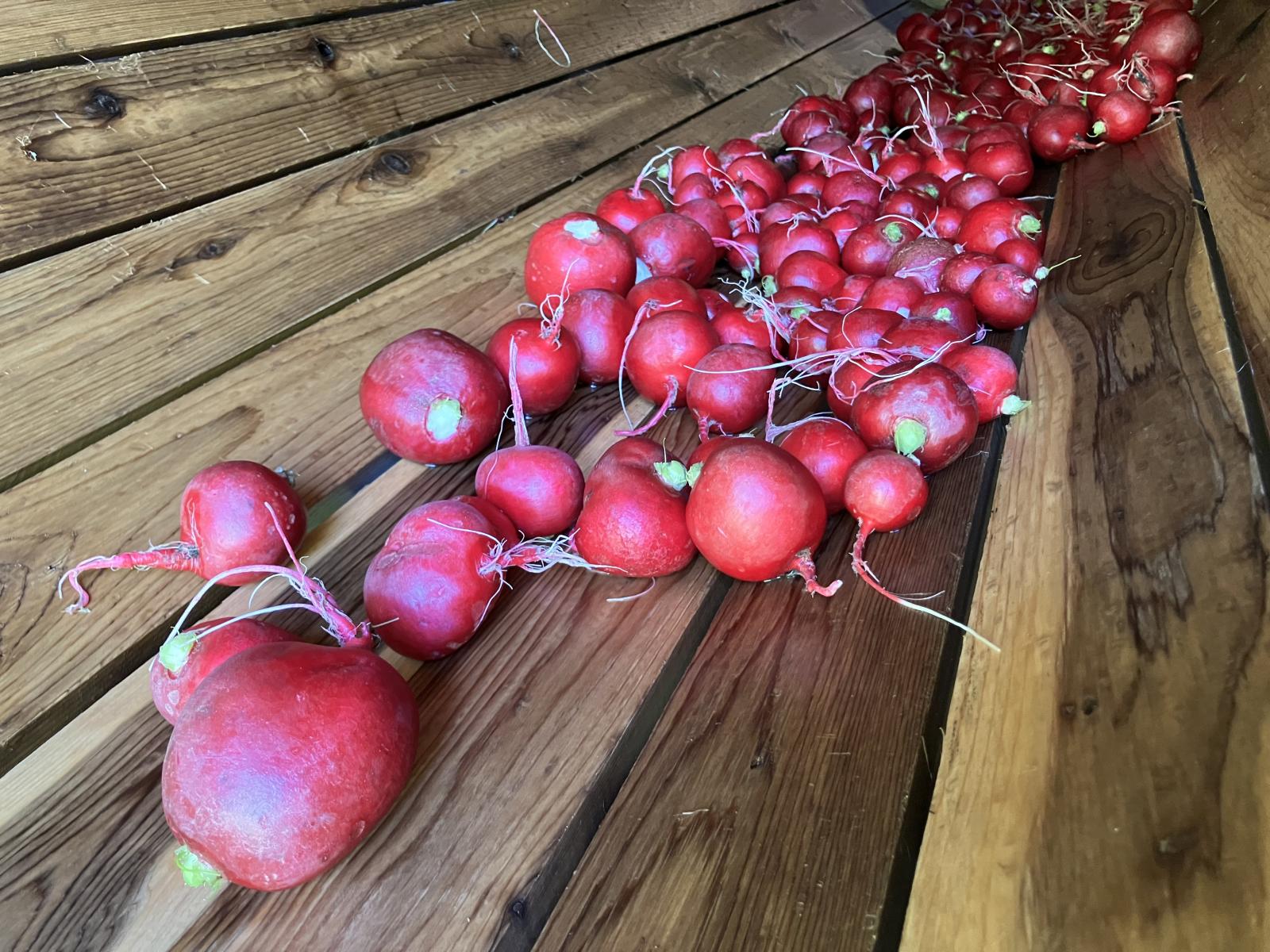
Radishes tumbling through the root washer.
I hope everyone got out to do their U-Pick last week. Remember that a significant part of your share is the U-Pick crops. It's a good time to just be out in the field (hopefully without your phone), enjoy the outdoors, and possibly make new friends with co-members that are picking nearby. The strawberries are sweet and plentiful, so enjoy them while they are with us - it never seems to be long enough. Here are a few things we enjoyed this past week.
Romaine - made the grilled Caesar salad I mentioned last week. It was delicious and simple to prepare.
Bok choy, radicchio, turnips, cilantro - made the Asian Style Cole Slaw from this site. This is yet another reminder to think outside a specific recipe list of ingredients and use what you have - cooking becomes much more enjoyable when you apply this principle.
Kale, green garlic, snow peas, cilantro - made the Kale Rice Bowl from this site. This is another dish that as I have enjoyed it over the years, I prepare it with what I have on hand. The bok choy and/or komatsuna can be used in place of the kale here (and I have done it), I added the peas, and have added peppers in the summer. This is a great weeknight meal! This calls for ground pork but ground chicken and tofu work too.
Lettuces, radicchio, radish and snow peas - made salads for lunch and dinner. Love the added crunch and sweetness from the snow peas.
June 7, 2026
Welcome Scallions!
by Linda Dansbury
Welcome Scallions!
by Linda Dansbury
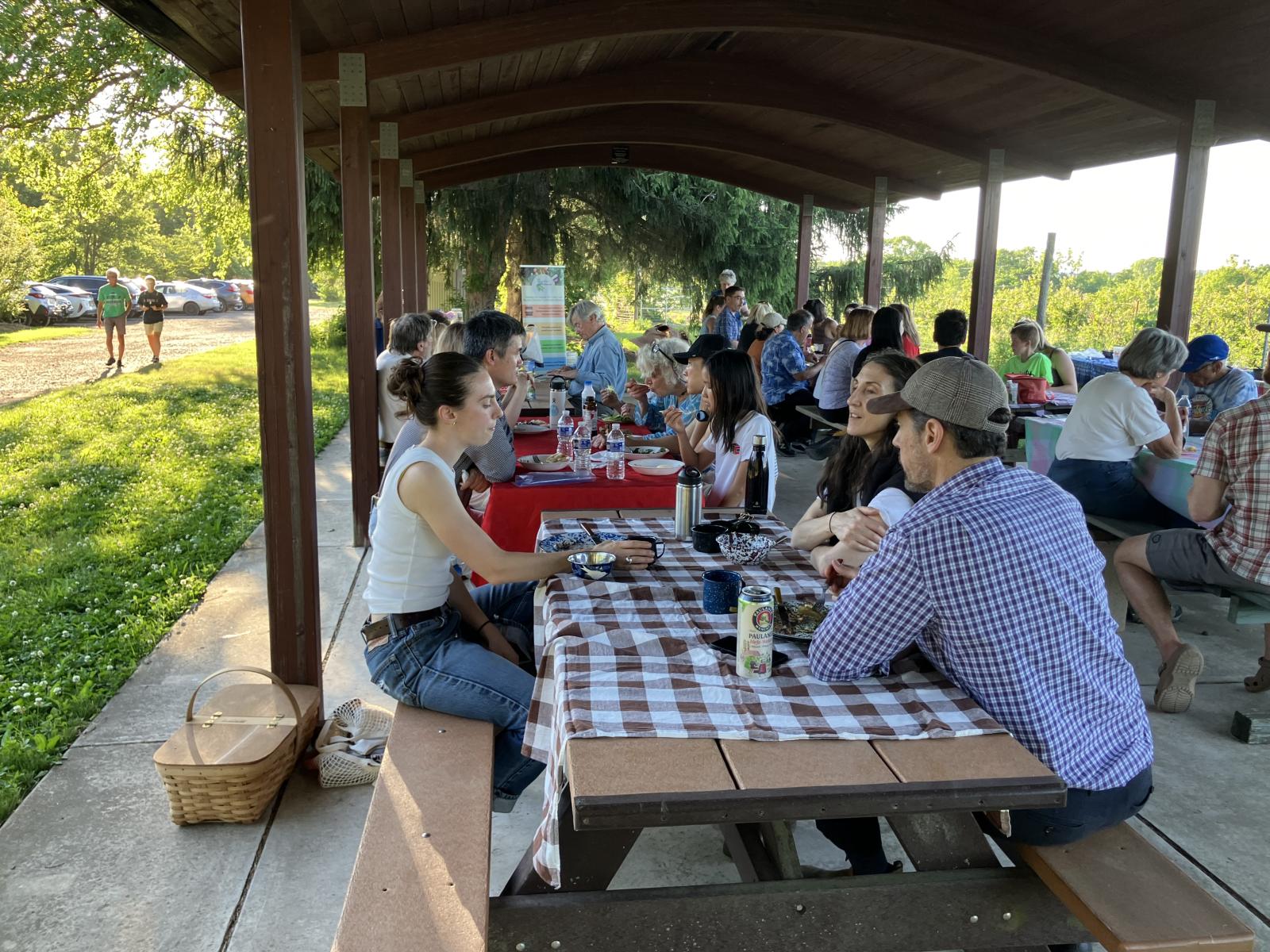
Potluck with the Bucks County Foodshed Alliance and CSA members.
Hope you are enjoying the first of the U-Pick crops. Here is a bit of info on the newest crops. There are a lot of new things that appeared last week, so be sure to read my post from last week too if you need info on how to enjoy crops such as escarole and radicchio and how to best store and freeze strawberries.
Scallions - farm scallions are pretty delicate so treat them carefully. Store in a plastic bag in fridge and try not to squish them. Since they are not sprayed with any chemicals, they likely won't keep for more than a week. If a dish calls for onions, and we have scallions, I sometimes add scallions at the end of cooking in place of the onions.
Kohlrabi - I wrote about this last week, but thought I would mention again that the kohlrabi is fresh and has not been stored, so it is sweeter than late in the year. Enjoy it raw, sauteed or stir fried!
June 7, 2026
Crop Magic
by Farmer Derek
Crop Magic
by Farmer Derek
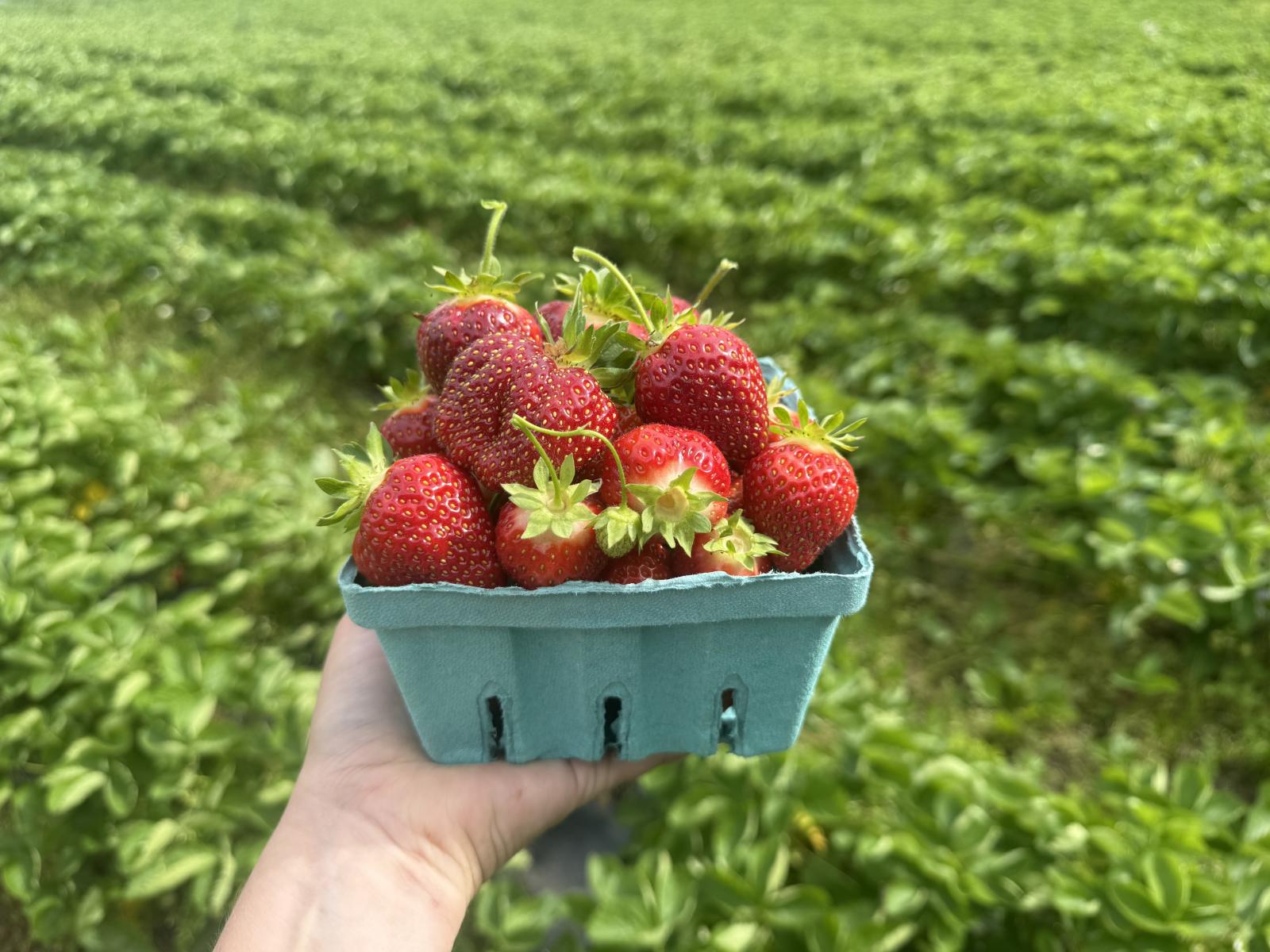
Strawberries!
Harvest #5 (Week A) should include escarole, romaine, head lettuce, radicchio, lettuce mix, kale, salad radishes, hakurei turnips, kohlrabi, dill, cilantro, scallions, garlic scapes, and collards. Some items will be a choice.
U-pick should include strawberries, snow peas, and labeled herbs like sage, garlic chives, oregano, catnip, lemon balm, mint, parsley, and bronze fennel (bring scissors).
FYI we do our best to predict the harvest but we don't always get it 100% right.
Regarding U-pick:
- Check the u-pick board in the hallway for u-pick crops and amounts before picking. Amounts listed are per share per week.
- Only crops listed on the board are available for u-pick.
- U-pick crops and weekly allotments can be harvested any day of the week, 8am–8pm, Monday through Sunday of your pick up week. So if you can’t do your u-pick on your scheduled pick up day, feel free to come back any other day that week.
- BYO scissors for herbs and flowers.- We provide half-pint, pint, and quart u-pick baskets for members to measure and harvest into. Please save these and reuse them as much as possible. If you have some that are still in good shape at the end of the season we'll gladly accept them back.
June 7, 2026
June Flow
by Farmer Derek
June Flow
by Farmer Derek
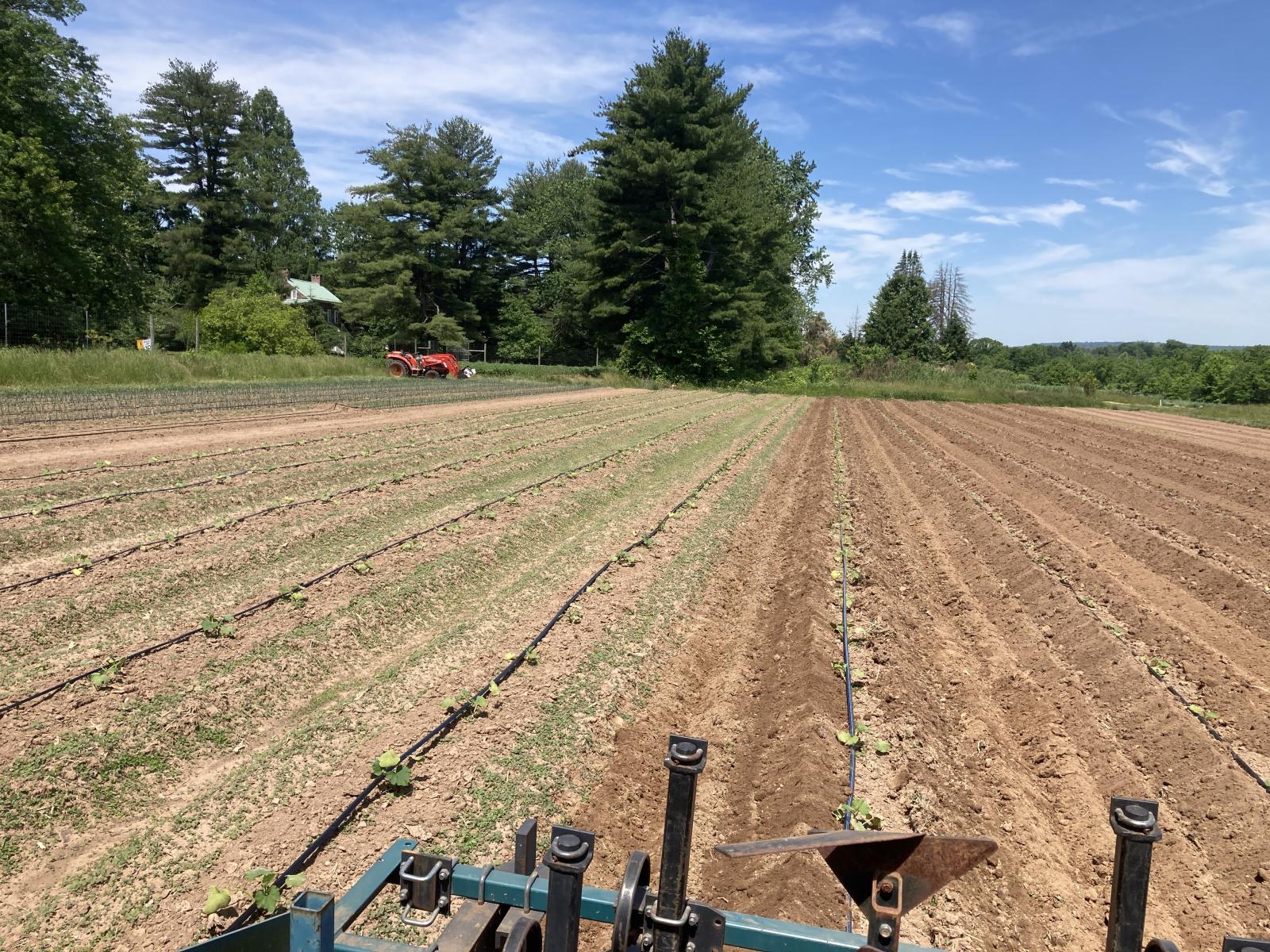
Using a tractor and a toolbar fitted with various implements to hill/cultivate winter squash beds.
It's officially tomato season. Pruning and trellising of the cherries commenced last week and will occur biweekly through July or early August. The first planting of tunnel slicers is up next. Either this week or next we'll transplant the 3rd and final round of tomatoes, into the first plot of our 3-position moveable high tunnel. Cherry tomatoes typically begin ripening in early July, with slicers not far behind.
We're also in quite a dry spell and spent much of last week installing and running irrigation, seemingly nonstop. By end of day Friday we got very close to adding water everywhere we needed to. Fortunately we received about a quarter inch of rain Saturday evening, along with some cooler temperatures, relieving some stress and pressure. With a chance of rain forecast for mid- to late-week I think we can pause installing new water lines and focus on other tasks. Because we're in a water deficit, we'll probably still add some here and there for the particularly thirsty crops.
This week we continue with the weekly tasks of harvesting, transplanting, weeding, and cultivating as well as aforementioned tomato work. We're hopeful the 3,000 sweet potato slips actually arrive this week and we can plant them before our next rain event.
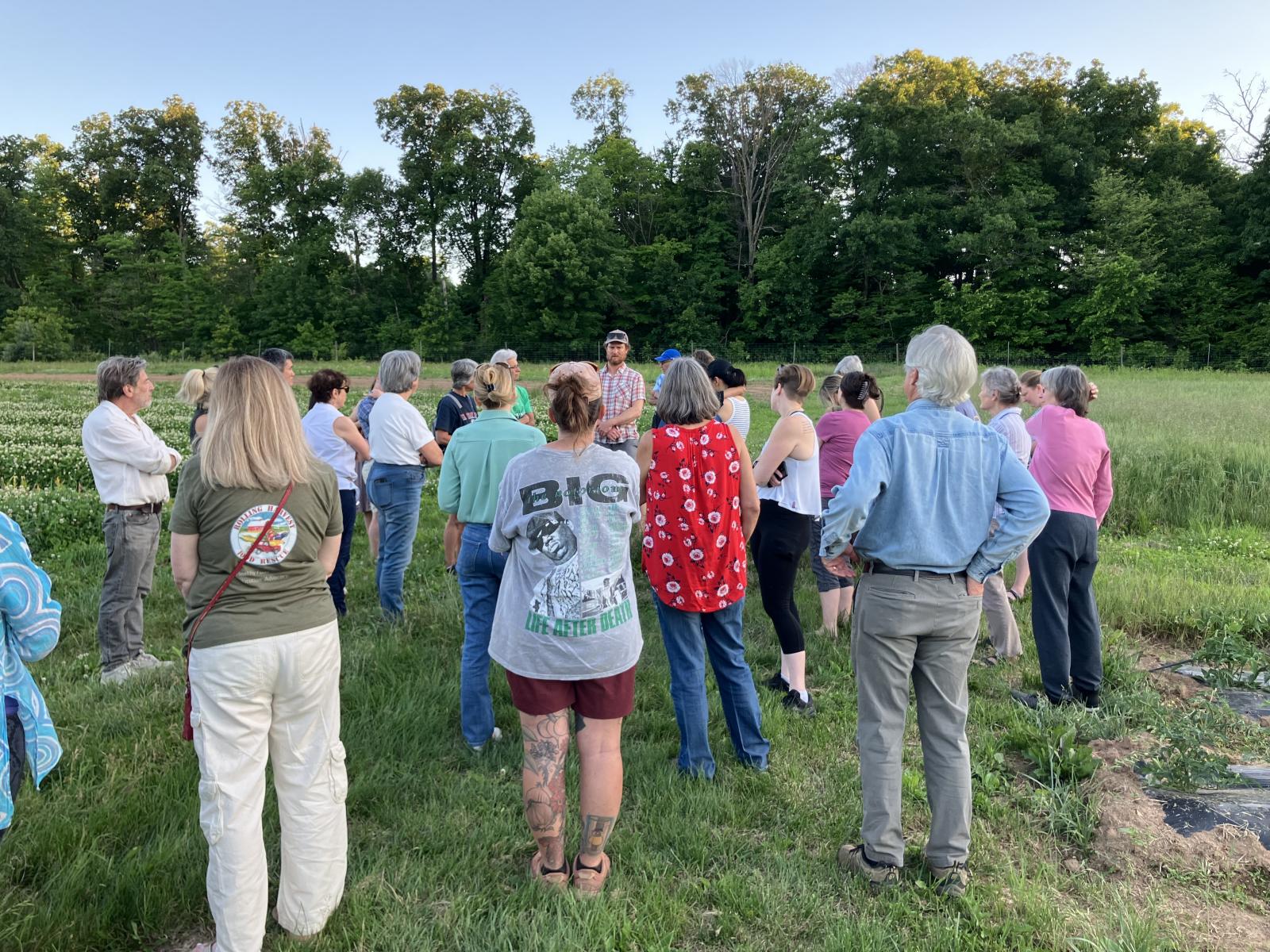
Last week we hosted a potluck and farm tour for the Bucks County Foodshed Alliance.
June 7, 2026
Workshifts this Week (6/8/26)
by Farmer Derek
Workshifts this Week (6/8/26)
by Farmer Derek
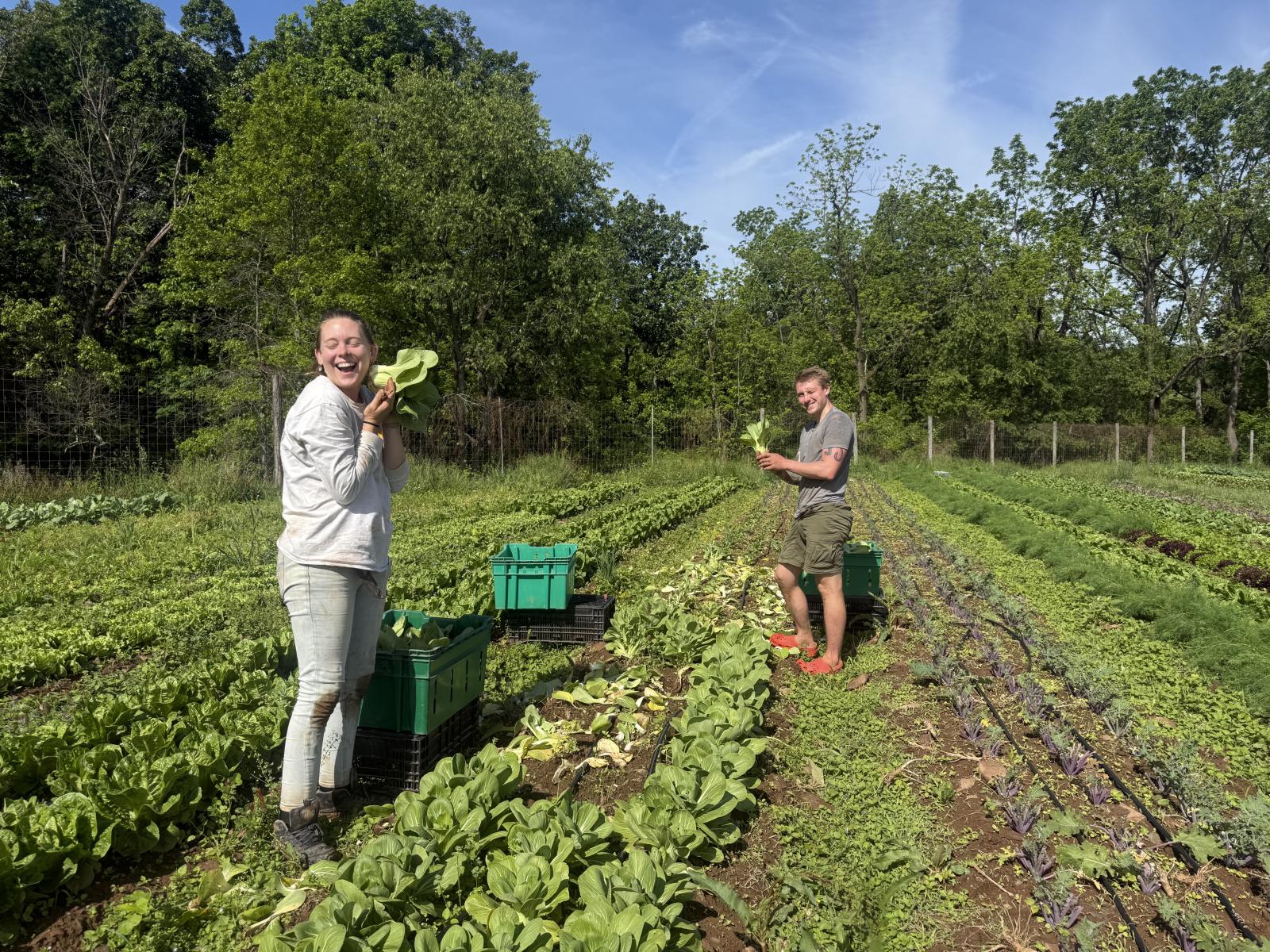
Farmers Lina and Connor harvesting some bok choy a couple of weeks ago.
We're about 2/3 of the way through carrot weeding - hoping to wrap it up this week or pivot to something else, perhaps onion weeding.
This week's workshift schedule:
- Wednesday 6/10 9-11am
- Wednesday 6/10 6-8pm
- Friday 6/12 9-11am
- Sunday 6/14 7-9am
Bring gloves, water, a hat, sturdy shoes, and a pad for kneeling (if necessary for you).
We meet under the large red maple at the end of the barn by the pick up room.
Please be there by the scheduled start time (it might be hard to find us in the fields otherwise).
June 7, 2026
Calling for Bags!
by Farmer Dana
Calling for Bags!
by Farmer Dana
If anyone has grocery store bags saved up, please bring them to the farm. We can give them a second life in the Harvest Room with members who need them to collect their shares. You can put them in the bins under the first harvest table immediately to your left as you walk in the Harvest Room.
SEARCH NEWS ITEMS
POSTS BY TYPE
POSTS BY MONTH
Contact us:
215-598-7040 |
anchorruncsa@gmail.com


Anchor Run CSA
| 2578 Second Street Pike
, Wrightstown, PA 18940
215-598-7040 |
anchorruncsa@gmail.com
Anchor Run CSA
| 2578 Second Street Pike
, Wrightstown, PA 18940

©2026 Anchor Run CSA
powered by shelterCMS